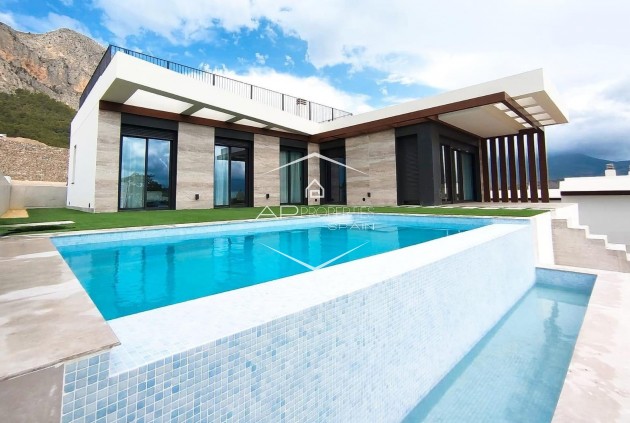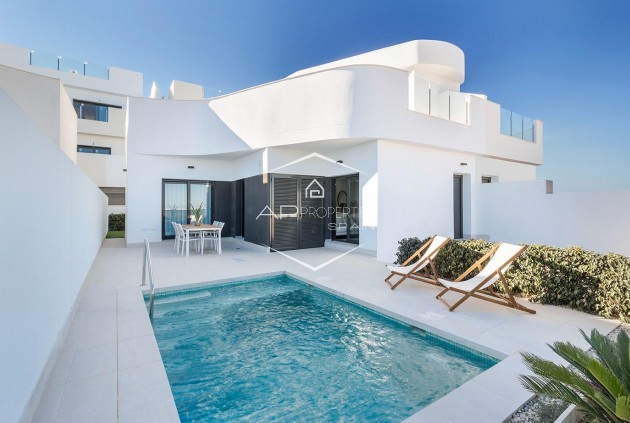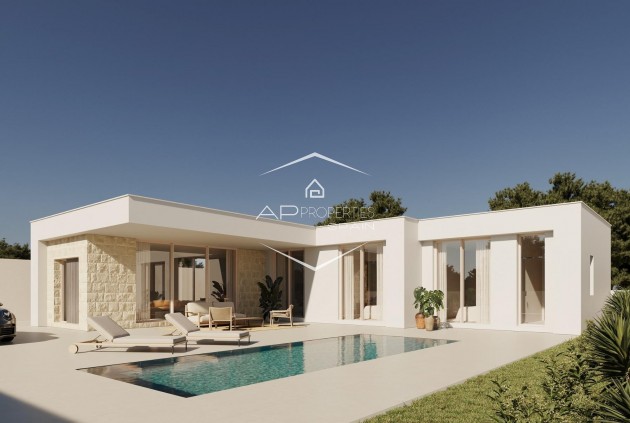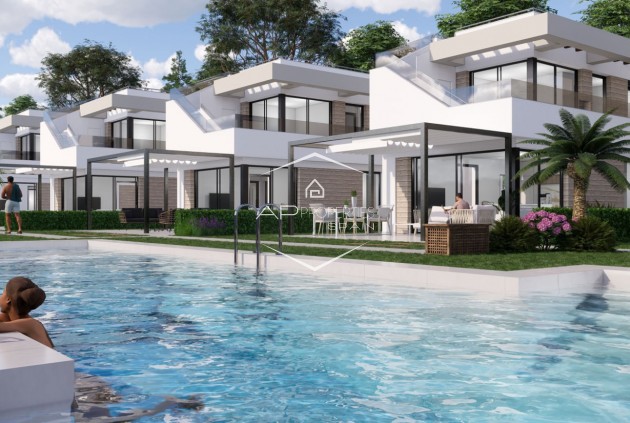






Your Plan for Villa in Costa Blanca: 2026 Guide
You arrive for a viewing trip with a clear picture in mind. A south-facing terrace, a pool with privacy, enough space for family to stay, and a finish that feels right from day one. Then the practical questions start. Can that plot take the house you want? How long will the licence take in this municipality? Is the builder priced fairly, or priced low for a reason?
A working plan for a villa answers those questions before money is committed in the wrong place. On the Costa Blanca and Costa Cálida, the result depends on more than design quality. Urban planning rules, slope and access, buildability, council response times, and the reliability of the construction team all affect what gets built, how long it takes, and what it finally costs.
These coasts continue to draw international buyers for good reasons. The market is active, the service network is used to overseas clients, and there is still a broad range between standard new-build stock and fully bespoke homes in prime areas. In practice, that usually supports better resale liquidity and gives buyers more room to match location, specification, and budget than they find on some other Spanish coasts.
The clients who get the best outcome rarely begin with house plans alone. They start by defining the villa’s job. Holiday use, full-time living, rental performance, future resale, or a mix of all four. Once that is clear, the right order becomes obvious. Choose the brief first, then the plot, then the architect, then the permit path, then the builder and contract structure.
That sequence saves time, protects budget, and prevents the expensive mistakes we see too often in this part of Spain.
Embarking on Your Spanish Villa Dream
You find a plot with a sea view near Moraira or on the Mar Menor side, the asking price looks reasonable, and the first sketches already feel like the house. That is usually the point where experienced buyers slow down. On these coasts, a good villa project starts when the site, the town hall, the build rules, and the ownership goal all point in the same direction.
The attraction is easy to understand. Costa Blanca and Costa Cálida give international buyers a wide spread of settings within a manageable area. You can compare established coastal neighbourhoods, golf resorts, hillside plots, and quieter inland positions without giving up airport access, medical services, marinas, or year-round restaurants and shops. That combination matters far more in practice than a glossy design reference.
These markets also function well for overseas owners because the professional network is used to foreign purchasers. In the stronger municipalities, it is normal to work with architects, lawyers, project managers, and builders who handle cross-border documentation, remote decision-making, and phased site visits as part of everyday business. That does not remove risk. It does make the process easier to control if the right team is in place.
The other advantage is range. Buyers are not limited to a choice between basic developer stock and ultra-prime trophy homes. There is still room in these areas to build something suited to your way of living, whether the brief is a low-maintenance holiday house, a permanent residence, or a villa designed with future resale firmly in mind.
On the ground, the project usually succeeds or fails before the final design is approved.
What a realistic dream looks like
A realistic villa plan in Costa Blanca or Costa Cálida has four qualities.
- It suits the plot: A design that works beautifully on a flat parcel in Ciudad Quesada may become expensive and awkward on a sloping site in Benissa Costa or Altea, where retaining walls, drainage, and access can reshape the whole scheme.
- It suits the municipality: Buildability, setbacks, height limits, pool positioning, and licence timing vary by council. Buyers who assume the rules are the same across the coast usually lose time and money.
- It suits your ownership model: A villa for six weeks of annual use needs a different layout and maintenance strategy than one intended for full-time living, extended family stays, or rental income.
- It suits your budget margins: The construction figure is only part of the commitment. Groundworks, external terraces, boundary walls, planting, lighting, air conditioning, and licence-related technical fees can change the total number quickly.
This is why we treat the early stage as a filtering process, not a design exercise. Before an architect develops floor plans, the brief needs to be tested against local planning reality and against the level of finish you expect. That step protects buyers from one of the most common mistakes in this region. Falling in love with a concept that the plot, the council, or the budget will not support.
Clients who get the best outcome usually arrive at design later than they expected, but in a much stronger position. They know what the villa must do, where it should sit, what constraints the municipality will impose, and how far the budget can stretch without creating pressure later in the build.
Defining Your Vision and Securing Your Budget
Before anyone looks at façades, finishes, or pool shapes, define what this villa is meant to do for you. A property that needs to function as a lock-up-and-leave holiday home will be planned differently from one that will host extended family for months at a time. If you want long stays, you’ll care more about storage, winter sun, utility areas, and privacy between sleeping zones. If you’re thinking about future resale, broad appeal matters more than highly personal design choices.

Start with use, not style
Clients often begin by saying they want “modern Mediterranean” or “clean Ibiza style”. That’s fine as a reference point, but it doesn’t answer the practical brief.
A stronger starting framework looks like this:
- Primary use: Permanent residence, seasonal use, mixed family use, or investment-led ownership.
- Occupancy pattern: Two people most of the year, or frequent larger groups.
- Privacy needs: Separate guest suites, office space, pool-facing social areas, or quieter bedroom wings.
- Operational needs: Low-maintenance garden, lift provision, shaded parking, home automation, energy efficiency, or storage for sports equipment.
Those answers shape room count, circulation, orientation, and whether the design should prioritise open-plan living or more separation. They also influence where you should search. A sea-view plot with more topographical complexity may suit one buyer perfectly and frustrate another.
Build the full budget, not the hopeful one
The biggest financial mistake in a villa project is treating the plot price plus construction quote as the whole picture. It never is.
Budget rule: Your build budget needs to cover the legal, design, planning, municipal, and decision-stage costs around the house, not just the concrete and finishes.
You also need to think about timing. Payments don’t usually arrive as one neat total. They come in stages tied to land acquisition, project documentation, licence progress, and construction milestones. That’s one reason international buyers often feel underprepared. Many online comparisons focus on resale affordability, but they don’t explain new-build financing structures, staged payments, or tax implications. That gap is noted in Taylor Wimpey Spain’s discussion of affordability and information gaps for buyers.
What to include in your planning budget
Even without putting fixed figures on every item, your financial plan should account for more than land and works. At minimum, review these categories with your legal and project team:
- Acquisition costs: The purchase itself, plus taxes and completion costs tied to buying the plot.
- Professional fees: Architect, technical architect, legal review, survey input, and any specialist reporting required for the site.
- Town hall and permit costs: Municipal licence charges and related filings.
- Project development costs: Design changes, specification upgrades, kitchen revisions, external works, and landscaping.
- Contingency allowance: Not because something will definitely go wrong, but because late-stage changes are common if the brief wasn’t disciplined early enough.
Separate must-haves from expensive impulses
At this stage, many projects either stay on track or drift. Buyers often approve small upgrades because each one feels reasonable in isolation. Better outdoor kitchen. Larger glazing. More bespoke joinery. A redesigned staircase. Another layer of exterior lighting.
None of those decisions is automatically wrong. The issue is whether the villa still serves the original brief.
A useful way to control this is to sort decisions into three bands:
| Priority level | What belongs here | Typical reasoning |
|---|---|---|
| Non-negotiable | Orientation, bedroom count, structural layout, privacy, parking | Hard or expensive to change later |
| High value | Good glazing, efficient climate control, durable flooring, quality kitchen layout | Strong effect on daily use and resale |
| Optional | Statement features, niche materials, highly personalised details | Nice to have, but easy to overspend on |
Ask the financing questions early
If you’ll use financing, raise that before design progresses too far. It affects drawdown timing, payment structure, and how much liquidity you want to preserve for contingencies and furnishing. Don’t assume lenders, advisers, or developers will all work from the same timetable. They often don’t.
The strongest early-stage brief is concise. What is the villa for, how will it be used, what can’t be compromised, and what budget range still feels comfortable if the process takes longer than hoped. Once those answers are firm, the search for land becomes sharper and far more productive.
Choosing the Perfect Plot on the Costa Blanca or Costa Cálida
A buyer finds a plot with a wide sea view near Moraira, falls in love with the photos, and wants to reserve it quickly. Then the architect checks the slope, the lawyer reviews the planning file, and the builder prices the retaining walls. The plot still works, but the build cost is far higher than expected. I see versions of this regularly across Costa Blanca and Costa Cálida. The land purchase often decides whether the whole project stays efficient or becomes a series of expensive compromises.

Costa Blanca North, South, and Costa Cálida
These three areas serve different types of buyers, and the plot risks are different in each one.
Costa Blanca North includes markets such as Jávea, Moraira, Calpe, and Dénia. Buyers come here for stronger views, mature villa areas, and a more architectural feel. The trade-off is usually technical. Many premium plots sit on slopes, which can mean more excavation, more structure, more engineering input, and tighter rules on how the house steps through the site.
Costa Blanca South often appeals to buyers who want easier access, year-round services, and practical day-to-day use. Orihuela Costa, Guardamar, and nearby areas can offer flatter land and simpler logistics. The challenge is often density rather than terrain. On the wrong plot, privacy disappears, pool orientation suffers, and neighbouring buildings shape the design more than your own brief does.
Costa Cálida attracts buyers who want more land options or better value per square metre. That can be a smart route, especially if internal space, a generous garden, or a broader search radius matters more than a prestigious postcode. It still needs careful checking. In some municipalities, infrastructure, road access, and local planning interpretation deserve much closer attention than buyers expect.
What matters more than the view
A good plot is not just attractive. It needs to support the house you want to build, within the cost and timeline you can accept.
Start with the points that directly affect buildability and cost:
- Urban classification: Confirm the land classification and the actual building parameters attached to it.
- Road access: Check whether construction vehicles can reach the site without difficulty.
- Utilities: Verify water, electricity, drainage, and telecom connections. Do not rely on verbal assurances.
- Topography: Slope affects excavation, foundations, drainage, retaining walls, and final build cost.
- Orientation: Sun exposure changes how terraces, glazing, shaded areas, and the pool will work through the year.
- Surrounding context: Review overlooking, road noise, future development nearby, and how much privacy the plot can realistically offer.
On the Costa Blanca North, orientation and slope usually carry more weight than overseas buyers first assume. A plot with dramatic views but poor access and heavy retaining requirements can still be right, but only if the budget allows for that complexity. On the Costa Blanca South, a flatter plot may be simpler to build on, yet the design must work harder to create privacy and a strong outdoor living layout. In Costa Cálida, larger plots can look straightforward at first glance, but utility connections and municipal detail can be where delays start.
Trade-offs that shape the whole project
Every plot asks you to choose what matters most.
A hillside sea-view plot can produce an outstanding villa. It can also require split levels, structural walls, pump systems, more detailed drainage design, and longer site preparation. Those costs are often justified, but they should be visible before reservation, not discovered after purchase.
A flatter urban plot usually gives a cleaner build process and more predictable construction pricing. The compromise is often emotional rather than technical. You may get less visual drama and less separation from neighbours, so the architect needs to create quality through layout, landscaping, screening, and orientation.
Semi-rural plots offer space and quiet. They also deserve a stricter legal review, especially around access rights, service connections, and what is permitted on the parcel.
The right plot is the one that remains strong after legal checks, design testing, and builder feedback.
Due diligence before you commit
Buyers should test a plot from legal, technical, and practical angles before paying a reservation or signing a private contract. In Spain, and particularly in municipalities along Costa Blanca and Costa Cálida, assumptions create problems fast.
Use this shortlist during the review process:
- Planning position: Confirm what can be built under current rules, including setbacks, occupancy, height, and build volume.
- Boundary accuracy: Compare title documents, cadastral information, and the physical site.
- Access rights: Make sure the plot has proper legal and physical access.
- Ground behaviour: Assess slope, drainage, and how the site handles heavy rain.
- Neighbour impact: Check what is built around the plot now and what nearby land could become later.
- Sun and privacy: Visit at different times of day if possible. Site plans do not show how a plot feels.
The strongest buyers bring in the architect, lawyer, and a builder or technical advisor early. That costs a little more upfront and saves far more later.
Red flags worth taking seriously
Unclear zoning is one warning sign. Vague answers about utilities are another. A third is a plot that looks open in marketing photos but feels boxed in when you stand on it.
I also treat rushed sales language with caution, especially in competitive coastal areas. If a seller or agent keeps talking about demand but avoids precise answers on buildability, access, or services, slow the process down and verify everything independently.
A plot purchase should reduce uncertainty, not add to it. On these coasts, the best opportunities are rarely the ones that only look good on a listing portal. They are the plots that hold up under scrutiny and let your villa be built with fewer surprises, fewer revisions, and better long-term value.
Securing Spanish Design and Planning Permits
A buyer finds a good plot in Moraira or Altaona, agrees the purchase, and assumes the hard part is over. In practice, the permit stage is where a villa project either settles into a controlled process or starts losing time, money, and design clarity.

On the Costa Blanca and Costa Cálida, buyers often expect one national system. What they meet is a local process shaped by the Ayuntamiento, the architect’s file quality, and how well the team understands that municipality’s requirements. The rules may sit under wider regional planning law, but day-to-day handling varies between town halls. Jávea does not move like San Javier. Benissa does not review files in quite the same way as Orihuela Costa.
Who handles each part of the process
The architect prepares the design, planning documents, and technical project needed for submission. That includes turning your brief into something the town hall can assess against local planning rules, not just something that looks good in a brochure.
The technical architect, or aparejador, deals more closely with build control, measurement, technical coordination, and site supervision. On many villa projects in this part of Spain, this role becomes especially important once costs, materials, and construction detailing start affecting what was approved on paper.
Your lawyer checks ownership, urban status, and legal consistency. Your builder should be consulted before the project is over-developed, because some attractive design decisions are expensive or awkward to build on sloping coastal plots.
The permit process works best when those four people are aligned early.
What the town hall is actually reviewing
An Ayuntamiento is not approving a dream home. It is reviewing a file for compliance.
That file usually needs to show that the project fits the plot classification, local setback rules, permitted build volume, height limits, technical code requirements, and any specific municipal conditions. In parts of the Costa Blanca, design review can also become more sensitive where plots sit near consolidated urbanisations, protected views, or established housing patterns. In the Costa Cálida, the practical issues are often different. Access, drainage, topography, and infrastructure readiness can become the sticking point.
A strong application is usually quiet and straightforward from an administrative point of view. Clear ownership. Clear plans. No contradictions between drawings, land records, and technical reports.
The documentation stage buyers should take seriously
Spanish villa projects usually move from an initial design package into a fuller technical project for licence and construction. Buyers do not need to know every Spanish label, but they should understand the sequence.
The early stage tests whether the house you want can fit the plot legally and sensibly. The technical stage locks down the construction information, compliance detail, and submission package. If the first stage is rushed, the second stage turns into damage control. Rooms move. Terraces shrink. Costs rise. Approval takes longer because the team is correcting assumptions that should have been checked months earlier.
International buyers also need their personal paperwork ready at the same time. Identification, tax numbers, ownership structure, and signing authority should not be left until the architect is ready to submit.
Common permit problems in Costa Blanca and Costa Cálida
The pattern is familiar.
A buyer approves a design based on views and pool position before the architect has fully tested setbacks. A builder sees the plans too late and points out that retaining walls, access for machinery, or structural spans will increase the cost sharply. The submission goes in with small inconsistencies between the plot documents and the project drawings. The municipality asks for corrections. Weeks pass.
The problem is rarely one dramatic mistake. It is usually a chain of smaller ones.
Three issues come up repeatedly in this region:
- Municipal variation: Each town hall has its own pace, preferences, and document expectations.
- Overdesigned early concepts: Coastal buyers often push glazing, basement space, terraces, and pool layout before the planning envelope is fully tested.
- Late technical coordination: Drainage, levels, retaining structures, and service connections are sometimes treated as construction issues when they should have been addressed before licence submission.
A practical permit workflow
Treat permits as a sequence of checks, each with a clear purpose.
| Permit stage | What should be confirmed | What usually causes delays |
|---|---|---|
| Preliminary design review | Planning fit, local parameters, basic massing, likely constraints | Designing beyond the plot’s legal envelope |
| Technical development | Structure, levels, installations, code compliance, buildability | Unresolved technical decisions or unrealistic specifications |
| Licence submission | Complete drawings, forms, reports, ownership documents, municipal fees | Missing documents, inconsistent plans, unclear plot data |
| Pre-start clearance | Licence conditions, contractor readiness, insurance, site logistics | Assuming work can start before every approval and notice is in place |
How to keep the permit phase under control
Ask direct questions. Has the architect checked this against the municipality’s current planning conditions? Has the lawyer confirmed the urban status matches the intended build? Has the builder reviewed the design before submission, not after?
Request plain-language answers. If a point is still provisional, label it as provisional. If a municipality is known for slow responses or additional clarifications, build that into your timing from the start.
I also advise buyers in Costa Blanca and Costa Cálida to avoid treating permit timing as a fixed calendar promise. Town halls do not always work at the speed a foreign buyer expects, especially in busy coastal municipalities with high application volumes. What you can control is the quality of the file, the local experience of the professionals, and whether the project reaches the Ayuntamiento in a clean, coherent form.
Handled well, this stage protects everything that follows. It reduces redesign, prevents contract disputes during construction, and gives the build a far stronger start.
Managing Construction Timelines and Key Milestones
You get the building licence, the contractor mobilises, and the site finally looks active. For many overseas buyers, that is the moment confidence rises and risk rises with it. Construction in Costa Blanca and Costa Cálida usually moves well if decisions are fixed early, the contract is clear, and someone local is checking progress against the programme rather than against hope.

A custom villa build often runs for 10 to 12 months, and poor plot choice is linked to 30% of delays. That matches what we see on the ground. Straightforward urban plots with good access, clear levels, and standard service connections are far easier to deliver on time than sloping sites, rural plots, or land with awkward retaining, drainage, or utility issues.
How the programme usually unfolds
The early months test patience. Excavation, retaining work, foundations, drainage, and structure can absorb a great deal of time and money before the villa looks recognisable. In parts of Costa Blanca North, where plots are steeper and access is tighter, this stage often tells you whether the original timeline was realistic.
Then the build becomes more visible.
Once the structure, roof, and external envelope are in place, progress feels faster because owners can finally read the rooms, circulation, and views. After that, services and internal works take over. Electrical first fix, plumbing, ducting for climate control, insulation, partitions, waterproofing, and screeds all need coordination. A delay in one trade can affect several others, especially if materials were ordered late or a design change was approved casually.
Milestones that deserve close attention
Daily photo updates are not enough. Track the points that affect cost, sequencing, and quality.
Groundworks and structure
This stage confirms whether the site behaves as expected once construction starts. Soil conditions, hidden retaining needs, rainwater management, and machinery access can all change the pace of work. In Costa Cálida, flatter plots often simplify this phase, but service connections and boundary conditions still need checking carefully.
Get written confirmation that excavation, foundations, slab levels, and structural elements match the approved drawings before the project moves on.
External envelope and first fix installations
Roofing, waterproofing, windows, exterior doors, insulation, plumbing runs, electrical conduits, and air conditioning infrastructure should be reviewed as a coordinated package, not as separate trades. Problems caught here are still fixable at a sensible cost. Problems found after plastering and tiling are expensive and irritating.
Late changes cause a lot of avoidable disruption. Shifting a bathroom layout, adding floor boxes, changing glazing sizes, or altering kitchen positions can slow the programme and trigger variation costs very quickly.
Finishes, exterior works, and testing
This is the point where buyers focus on aesthetics, but timing still depends on logistics. Imported tiles, made-to-measure carpentry, specialist stone, bespoke glazing, and pool equipment often have longer lead times than clients expect. August can also affect supply and labour planning in Spain, so a project that looks close to completion in July may not hand over as soon as an overseas owner assumes.
Final testing matters just as much as finishes. Climate systems, underfloor heating if specified, irrigation, lighting scenes, pool plant, hot water, alarms, and access controls all need checking before handover.
Builder selection shows up in the timeline
A realistic schedule is one of the clearest signs of a serious builder. If a contractor promises an unusually fast delivery date for a custom villa in Moraira, Jávea, Benissa, or the Mar Menor area, ask how they are allowing for long-lead materials, inspections, holiday periods, and site-specific constraints.
I advise clients to look for three things in the building contract:
- Defined stage dates: Key phases should be identified clearly enough to track progress.
- A written variation procedure: Every change should be priced and approved before work proceeds.
- A payment schedule linked to verified progress: Stage payments should reflect work completed, not optimism.
Material cost inflation can still affect outcomes if allowances, exclusions, or provisional sums are vague. Fixed-price contracts give more control, but only when the specification is detailed enough to support them.
How to behave like a good client during construction
Owner behaviour affects the build more than many buyers realise.
- Keep one decision-maker or one approval route: Conflicting instructions from partners, relatives, or visiting friends confuse the contractor and the architect.
- Review by milestone, not by mood: A half-finished room often looks wrong because several layers of work are still missing.
- Record every change properly: Verbal site decisions are a common source of disputes.
- Visit with an agenda: Check selections, programme status, workmanship points, and open decisions.
Clients who stay interested, organised, and disciplined usually get a smoother result. Clients who treat the site visit as a running redesign session usually add cost and time.
Closing out the build properly
The final weeks are partly technical and partly administrative. Snagging, final certificates, utility setup, warranties, manuals, keys, and system demonstrations all need to be handled in an orderly way before you treat the villa as ready to live in.
In Spain, practical completion and legal readiness are not the same thing. A house can look finished and still be waiting on final documentation or utility formalities. That last stretch deserves the same attention as the first excavation because it determines whether handover is clean, insurable, and ready for occupation.
Your Comprehensive Villa Plan Checklist
A successful villa project rarely depends on one brilliant decision. It depends on a long chain of good decisions made in the right order. Buyers who stay organised, ask precise questions, and resist rushing usually enjoy a far smoother experience.
The checklist below is designed as a working document you can save, print, or review with your legal and project team.
The Ultimate Villa Planning Checklist
| Phase | Key Action | Notes & Considerations |
|---|---|---|
| Early brief | Define why you’re building | Clarify whether the property is for permanent living, seasonal use, family holidays, or investment-led ownership |
| Early brief | Set non-negotiables | Separate essential requirements from preferences. Bedroom count, privacy, orientation, and accessibility usually matter more than decorative ideas |
| Budget planning | Establish a full financial range | Include acquisition costs, professional fees, permits, design development, and contingency planning |
| Budget planning | Review financing route | If financing is relevant, raise it early so timing and staged payments don’t disrupt the project |
| Area search | Match coast to lifestyle | Costa Blanca North, Costa Blanca South, and Costa Cálida each suit different ownership priorities |
| Plot review | Check legal and planning suitability | Confirm buildability, urban classification, and restrictions before treating any plot as viable |
| Plot review | Test practical build conditions | Assess slope, access, drainage behaviour, utilities, privacy, and neighbour context |
| Professional team | Appoint the right specialists | Lawyer, architect, technical architect, and builder should be aligned early rather than added in fragments |
| Design stage | Build around the site | Good design responds to orientation, levels, and privacy. It doesn’t fight them |
| Design stage | Control specification drift | Keep a live record of agreed finishes, systems, and optional upgrades so costs stay visible |
| Permit stage | Submit complete documentation | Incomplete files often create avoidable delays and repeated municipal queries |
| Permit stage | Track municipal conditions | Ask what is confirmed, what is pending, and whether any local interpretation could affect design or timing |
| Contract stage | Use a detailed building contract | Scope, exclusions, variation procedure, payment stages, and completion expectations should be explicit |
| Construction | Review milestone by milestone | Focus on structure, envelope, services, finishes, and external works rather than reacting to isolated site impressions |
| Construction | Approve changes formally | Any variation should be priced, documented, and accepted before execution |
| Handover | Complete final certifications | Make sure legal occupancy-related documentation and technical completion paperwork are in order |
| Handover | Collect the operating file | Warranties, manuals, supplier details, keys, maintenance notes, and final plans should all be organised |
| After completion | Plan long-term ownership | Consider maintenance routines, seasonal management, landscaping care, and future resale positioning |
What works and what usually doesn’t
The villa projects that work best tend to share a few habits. The buyer stays patient during feasibility. The design follows the plot instead of ego. The contract is specific. Late changes are controlled. Communication goes through one clear channel.
The projects that become stressful usually show the opposite pattern. The land was chosen too quickly. The budget was optimistic. The permit stage was treated as a formality. The owner made too many design changes once construction had already started.
A good villa isn’t only well designed. It is well decided.
A strong plan for villa on the Costa Blanca or Costa Cálida doesn’t remove every challenge. Building always involves coordination, timing, and some uncertainty. But it does replace avoidable risk with structure. That’s the difference between hoping a project works out and actively setting it up to succeed.
If you’re ready to turn your plan for villa into a real project, AP Properties Spain can guide you from the first area and plot search through legal coordination, trusted architects and builders, and the final handover. For international buyers who want clear advice, local knowledge, and discreet support across the Costa Blanca and Costa Cálida, that kind of end-to-end guidance makes the whole process far more secure.
Share