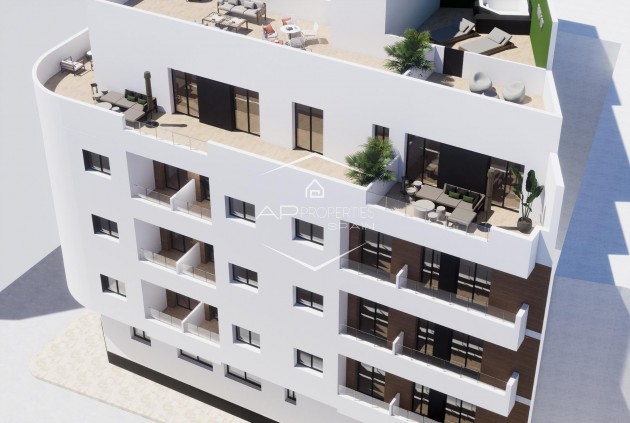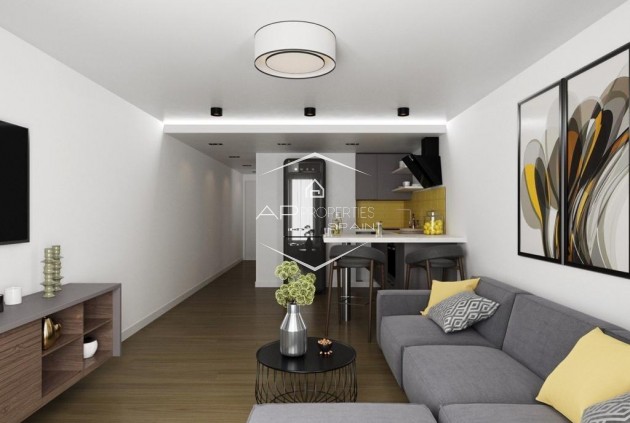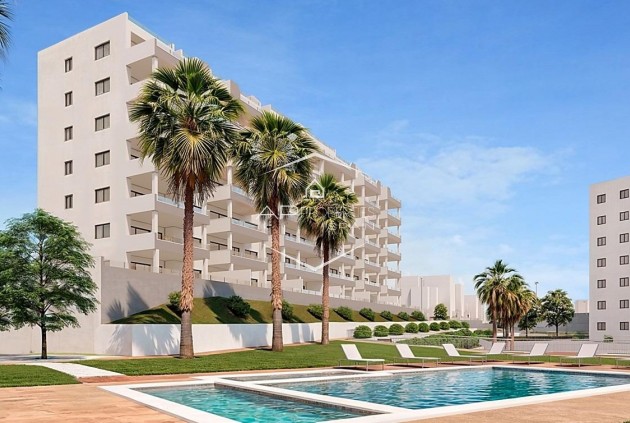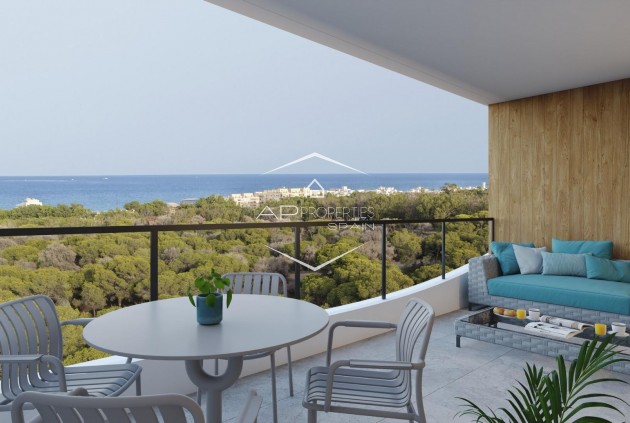






Luxury Apartments Costa Blanca Your 2026 Buyer's Guide
You're probably doing what most international buyers do at the start. Saving sea-view listings, comparing towns on a map, and trying to work out whether the apartment that looks perfect online is right for the life you want in Spain.
That's the question. Not just which property looks impressive, but which one will still feel right after the purchase, after the first summer, and after the practical realities of ownership begin. On the Costa Blanca, the difference between a smart luxury buy and an expensive mistake usually comes down to location fit, building quality, legal clarity, and total ownership costs.
Buyers searching for luxury apartments costa blanca often arrive with a clear vision and incomplete information. They know they want sun, privacy, design, and security. What they usually need is a sharper framework for choosing between lively coastal hubs, quieter residential enclaves, new-build convenience, resale character, and lifestyle use versus investment use.
Your Dream of a Luxury Spanish Home
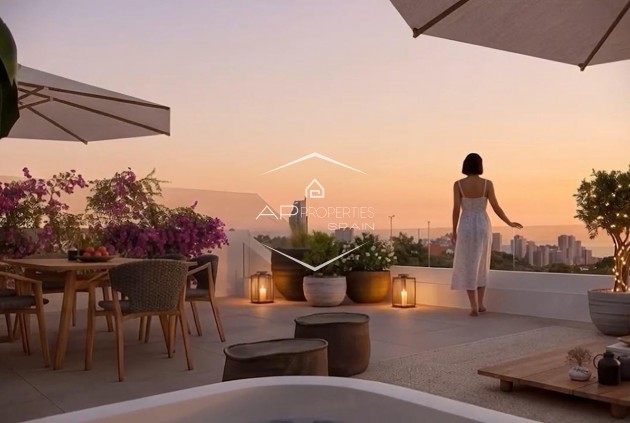
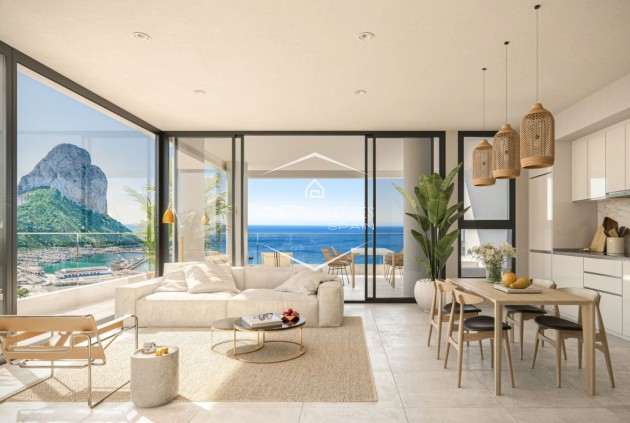
The appeal is easy to understand. A bright apartment with a wide terrace, breakfast looking over the Mediterranean, evenings in a marina restaurant, and a home that feels polished without becoming a maintenance burden. For many buyers, the Costa Blanca offers exactly that balance. It can feel more usable than a large villa and more refined than a standard holiday flat.
The strongest luxury apartments here don't just sell a view. They give you a way of living that's practical. Lock-up-and-leave security. Lift access. Concierge-style convenience in some developments. Communal areas that stay immaculate without you having to organise gardeners, pool technicians, or general maintenance yourself.
That's why apartments often suit buyers who want quality without friction. Retired couples who travel often. Families who want beach access and services nearby. Investors who care about presentation, ease of letting, and cleaner resale positioning.
A luxury purchase only feels luxurious when ownership is straightforward.
The complication is that the dream and the deal are not the same thing. A stunning terrace won't fix poor orientation. A fashionable building won't compensate for noisy surroundings, weak management, or hidden ownership costs. International buyers also have to deal with Spanish paperwork, tax exposure, due diligence, and local market differences that aren't obvious from portal photos.
In practice, buyers need two things at once. Emotional clarity about where they want to live, and technical discipline about what they're buying. That's where a structured approach matters far more than another afternoon scrolling through listings.
Exploring Costa Blanca's Luxury Enclaves
Costa Blanca isn't one lifestyle. It's a string of very different coastal identities. Buyers do better when they stop asking “Where is the most luxurious?” and start asking “Which town fits the way I want to live?”

Altea for buyers who want atmosphere and elevation
Altea attracts people who care as much about setting as square metres. The old town, the hillside positioning, and the visual drama of the coastline give it a different feel from flatter, busier beach centres. Many apartment buyers here want sea views, architectural presence, and a setting that feels established rather than purely resort-driven.
It suits buyers who enjoy galleries, dining, and a slightly more composed pace. In apartment terms, Altea often rewards superior positions, larger terraces, and developments where privacy matters as much as proximity.
Jávea for active family life
Jávea works well for buyers who want a broader all-round lifestyle. It offers beaches, restaurants, sports, and an international resident base that makes year-round living easier. Apartment buyers who split time between holiday use and longer stays often feel comfortable here because the town supports both.
This is often a good match for families, semi-relocators, and buyers who want convenience without giving up prestige. The right apartment in Jávea usually needs strong outdoor space, sensible access to services, and a location that avoids feeling too cut off in the off-season.
Moraira for quiet prestige
Moraira appeals to buyers who don't need noise, crowds, or high-rise energy to feel they've bought well. Its charm comes from discretion. It tends to attract people looking for refined surroundings, marina access, and a more private atmosphere.
For apartment buyers, that means developments with lower density, cleaner presentation, and a sense of calm. The wrong purchase in Moraira is a property that looks good online but lacks the subtle quality this area demands in person.
If your ideal day involves walking to a café, a cove, or a mooring rather than driving into a busy centre, Moraira usually deserves serious attention.
Dénia and Alicante for two different kinds of convenience
Dénia suits buyers who want a working town with character. There's a marina, a historic core, and a stronger sense of everyday life than in purely seasonal areas. Luxury apartments here often appeal to owners who want urban services, gastronomy, and a home they can use comfortably beyond peak holiday months.
Alicante offers a different proposition. Prime areas give buyers city convenience with sea access, which can work well for people who value walkability, airport access, and a more connected day-to-day rhythm.
Here's a simple way to think about the match:
| Town | Best suited to | Apartment priority |
|---|---|---|
| Altea | Design-led buyers, view seekers | Elevation, terraces, privacy |
| Jávea | Families, active owners, mixed-use buyers | Space, accessibility, year-round use |
| Moraira | Quiet-luxury buyers, marina lifestyle | Low density, calm, discretion |
| Dénia | Lifestyle owners who want a real town | Walkability, amenities, marina access |
| Alicante prime areas | Urban buyers, frequent travellers | Connectivity, city services, sea proximity |
A buyer's shortlist should reflect lifestyle first. Budget comes next. When the order is reversed, people often buy a compromise in the wrong town and spend years trying to convince themselves they made the right choice.
Decoding the Luxury Market Prices and Value
Price on the Costa Blanca is layered. That's the first thing serious buyers need to understand. Two apartments can look similar in photographs and sit in completely different value bands once you factor in sea exposure, building position, development quality, and the prestige of the exact micro-location.
According to a Costa Blanca real estate investment guide, the average asking price for properties in Costa Blanca is €655,942, with the average price per square metre at €3,770. The same market guide notes that in premium micro-markets, sea-view apartments can start from €3,500/m² in Benidorm and Calpe and exceed €4,000/m² in Altea, while top-tier luxury penthouses often surpass €500,000.
What actually pushes value up
Sea view is the obvious driver, but not all sea views are equal. A full, open view from a principal living area and terrace commands a different reaction from buyers than a side glimpse from one bedroom. Frontline position, elevation, and orientation all shape desirability.
Exclusivity matters too. A well-run urbanisation with secure parking, strong communal presentation, and good privacy often holds value better than a similar-sized apartment in a more ordinary block. Buyers in the upper tier aren't only paying for interiors. They're paying for context.
A separate market guide cited in the same source states that a 70 to 80 m² apartment around 300 metres from the beach typically costs about €210,000 to €270,000, while small studios start around €170,000 and luxury penthouses exceed €500,000. That range tells you something important. Costa Blanca luxury is not one uniform segment. It's a stepped market.
How experienced buyers judge value
The most reliable way to assess an apartment isn't to ask whether it looks expensive. It's to ask whether the premium is justified.
Use this filter:
- View quality: Is the sea view protected and visible from the main living spaces, or only from an angle?
- Terrace usability: Can you dine, lounge, and enjoy shade at different times of day, or is the terrace mostly decorative?
- Building calibre: Does the entrance, lift, parking, and communal area support the price level?
- Walkability versus noise: Can you reach beach clubs, restaurants, or the marina without sacrificing peace?
- Liquidity on resale: Will the next buyer understand the value quickly, or will the property need too much explanation?
Practical rule: Buy the apartment that's easier to resell, not the one that requires the longest sales pitch.
That rule often eliminates flashy but awkward homes. Excessive size in a weak location doesn't rescue value. Nor does an expensive fit-out in a mediocre building. On this stretch of coast, buyers consistently pay for four things first. Position, light, outdoor living, and confidence in the building itself.
Defining Luxury Apartment Styles and Amenities
A buyer flies in expecting to choose between “modern” and “traditional,” then discovers the primary decision is far more practical. Do you want a lock-up-and-leave apartment with concierge-style services and low maintenance, or a larger residence in an established building where the proportions may be better but the upkeep is less predictable?

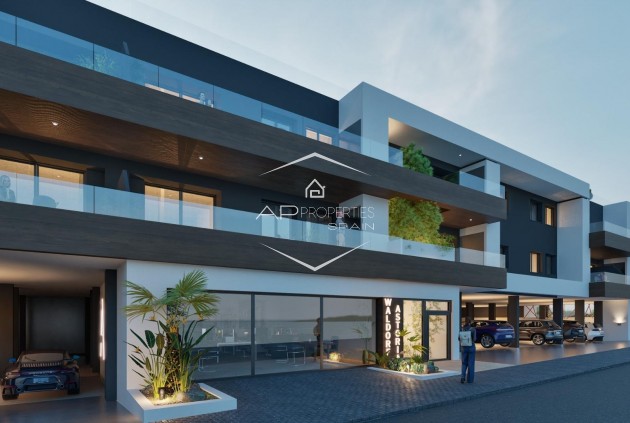
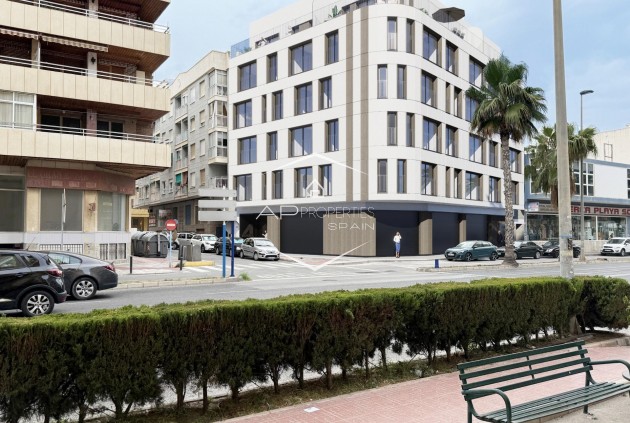
That distinction matters on the Costa Blanca because “luxury” covers several different products. New developments in places such as Finestrat, Altea, Calpe, and parts of Benidorm often focus on clean lines, hotel-style communal areas, and strong energy performance. Established frontline or marina-side apartments can offer more mature settings, larger terraces, and positions that are hard to replicate in new construction.
The style should match the purpose.
For a holiday home, owners usually benefit from easy access, secure parking, lift access, good sun orientation, and a terrace that works as an outdoor living area for much of the year. For longer stays, storage, winter comfort, acoustic insulation, and kitchen practicality become more important. For investment, the apartment has to photograph well, read clearly online, and sit in a development that supports the asking price over time.
What defines a luxury apartment in practice
Luxury buyers notice finishes first, but experienced buyers judge how the apartment functions. The better homes combine strong internal flow with outdoor space that is genuinely usable, not just visually impressive.
Features that consistently hold their value include:
- Wide terraces with depth: Enough room for dining, lounging, and shade.
- Full-height glazing: Better light and a stronger connection to the view.
- Open living spaces: More natural circulation and better entertaining space.
- Secure parking and controlled access: Important for part-time owners and resale confidence.
- Quality communal areas: Pool, gym, gardens, and reception areas that reflect the apartment's price point.
Developers on the Costa Blanca also increasingly highlight energy ratings, aerothermal systems, and efficient glazing in new homes, as shown in the regional new-build market analysis published by Kyero. That matters for international owners because lower running costs and better year-round comfort are easier to appreciate after purchase than during a 20-minute viewing.
The details that separate attractive from well-bought
I often see overseas buyers focus too heavily on marble, lighting, and furniture packs. Those items create impact, but they are not what make an apartment easy to own from abroad.
The stronger specifications are usually less visible:
| Feature | Why it matters in practice |
|---|---|
| Aerothermal heating and cooling | Better efficiency and more stable year-round comfort |
| Double glazing with good frames | Less outside noise, better insulation, lower energy use |
| Electric shutters or blinds | Sun control, privacy, and added security when absent |
| Smart climate or home control | Easier property management before arrival |
| Reliable lift and access design | Better day-to-day use, especially for older owners or guests |
Buyers protect themselves from expensive mistakes when they consider details such as these. A beautiful apartment with poor orientation can overheat in summer. A dramatic terrace without shade may be used only in spring and autumn. A stylish complex with weak management can age badly within a few years.
Anyone considering luxury apartments costa blanca should judge style and amenities together, not as separate choices. Contemporary new-builds usually suit buyers who want efficiency, cleaner management, and strong lock-up-and-leave appeal. Selected resale apartments suit buyers who value established positions, larger footprints, or locations where planning restrictions make new supply limited. The right decision depends on how you plan to live in the property, how often you will be away, and how important future resale is to you.
The International Buyer's Journey Step by Step
A buyer flies in for three days, falls for the sea view on the first afternoon, signs a reservation on the second, and only later discovers the apartment does not suit how they will use it. I have seen that pattern many times with international buyers on the Costa Blanca. The purchase process is usually straightforward. The mistakes happen earlier, when decisions are made in the wrong order.

Start with use case before you start viewings
The first decision is how the property needs to perform for you over the next five to ten years.
A holiday apartment used six weeks a year should be judged differently from a winter residence, a relocation base, or a rental-led purchase. The right area, building style, service level, and running costs can change quickly once that purpose is clear. Buyers who get this right waste less time, compare better options, and negotiate with more confidence.
Set the brief before you visit:
- Usage pattern. Holiday use, part-time living, full relocation, or investment.
- Location preference. Walkable town, marina setting, beachfront block, gated hillside development, or quieter residential area.
- Property needs. Bedroom count, terrace depth, lift access, parking, storage, privacy, sea views, and communal facilities.
- Financial limit. Purchase budget, buying costs, furnishing or works, and annual ownership costs.
That framework matters far more than a shortlist built around pretty photos.
Prepare the legal and financial groundwork
International buyers should have the transaction basics ready before making an offer. In practice, that usually means arranging an NIE number, opening a Spanish bank account, and appointing an independent lawyer who acts only for the buyer.
Good legal preparation protects more than the title deed. It helps confirm whether the apartment can be transferred cleanly, whether any debts or charges sit against it, and whether the community of owners has issues that may affect enjoyment or resale. For non-residents, this stage also avoids delays that can weaken a negotiating position.
One point is often misunderstood. A reservation agreement does not make a purchase safe. Due diligence does.
View strategically and negotiate with purpose
Buyers from abroad often have limited time on the ground, so viewings need structure. Compare similar properties in the same micro-market instead of jumping between very different options. A penthouse in central Altea, a new-build in Finestrat, and a frontline apartment in Calpe may all look attractive, but they answer different lifestyle and investment goals.
Once a property stands out, focus on the points that affect value in real ownership:
- Orientation and outdoor use: A large terrace is less impressive if wind, shade, or heat limits how often you use it.
- Parking and storage: These can make a major difference to convenience and resale.
- Community quality: A well-run building protects the experience of ownership and usually holds its position better.
- Written inclusions: Parking spaces, storage rooms, appliances, furniture, and completion dates should all be clear in writing.
Price negotiation should follow facts, not emotion. Condition, position within the building, noise exposure, service charges, and likely future resale matter more than staging.
For overseas clients, coordination is often as important as the offer itself. AP Properties Spain works with international buyers on search, area selection, legal coordination, negotiation, and post-purchase organisation, including updates or renovation planning where needed.
Completion and the first decisions after handover
Once the legal review is complete and the private contract is in order, completion takes place before the notary. Funds are transferred, the title deed is signed, and ownership is formalised.
Then the practical work starts.
The first weeks after handover usually include setting up utilities and direct debits, arranging insurance, confirming community contacts, and putting key holding or property checks in place if the apartment will sit empty for part of the year. Buyers planning seasonal use should also decide early who will handle cleaning, maintenance visits, and access for deliveries or minor repairs.
A smooth purchase rarely comes from speed. It comes from sequence, clear advice, and making sure the apartment fits both your lifestyle and your ownership structure before you commit.
Navigating Spanish Property Law and Finances
Many buyers focus on the agreed purchase price and assume that's the financial picture. It isn't. In Spain, especially for non-residents, the meaningful number is the total cost of acquisition and ownership.
That's where a lot of otherwise sensible purchases go off course. A property can look attractively priced against other luxury stock, but once taxes, fees, and ongoing obligations are added, the economics may feel very different.
Look beyond the headline price
Region-specific guidance matters here. The true cost of ownership extends far beyond the sale price, and in the Valencian Community, purchase taxes, notary fees, annual non-resident income tax, and wealth tax considerations can significantly impact net returns.
That has two consequences. First, buyers need proper pre-purchase budgeting. Second, they need advice that is local to the region, not generic guidance copied from another part of Spain.
The checks that protect you
Legal review should cover more than basic title. Buyers should insist on clarity around the property's exact legal status, any debts or charges attached to it, and whether the apartment and building comply with the permissions relevant to their use.
A useful way to think about due diligence is as a risk filter:
| Area to check | Why it matters |
|---|---|
| Title and ownership | Confirms the seller can legally transfer the property |
| Debts and charges | Prevents surprises linked to the apartment |
| Community status | Helps uncover disputes, arrears, or management issues |
| Planning and permissions | Reduces the risk of inheriting legal problems |
| Tax exposure | Shapes the real cost of ownership for non-residents |
Cheap on paper can become expensive in practice if the tax position, annual costs, or legal condition aren't understood before completion.
Ongoing ownership deserves planning too
Buyers sometimes prepare well for the purchase and poorly for ownership. That's a mistake, especially if the apartment is a second home or part-time residence. Annual taxes, community fees, maintenance, insurance, and compliance obligations need to be factored in from the outset.
This is also where property type matters. A modern apartment in a professionally run development often gives owners more predictable maintenance than an older property with fragmented management or deferred communal upkeep.
The legal side of a Costa Blanca purchase doesn't need to feel intimidating. But it does need to be taken seriously. Experienced buyers treat legal clarity and tax planning as part of the asset, not as admin to deal with later.
Your Investment Outlook and Next Steps
A well-bought luxury apartment on the Costa Blanca can do two jobs at once. It can improve how you live and hold its position as a desirable asset. Those are not separate goals when the property is chosen properly.
The market's appeal comes from a combination of factors. International demand, broad lifestyle appeal, and a product mix that ranges from lower-entry modern apartments to high-spec sea-view residences create different entry points for different buyers. That matters because it gives the market depth rather than making it dependent on one buyer profile.

Why the right apartment remains resilient
In practical terms, the apartments that tend to remain attractive over time usually share the same traits. Strong location. Usable outside space. Easy maintenance. Good security. Clear sea proximity or a compelling town setting. These qualities support both lifestyle enjoyment and future liquidity.
Buyers who treat the purchase purely as a dream often overpay for emotion. Buyers who treat it purely as an investment often choose something sterile that never quite fits their life. The better purchases sit in the middle. They're easy to use, easy to explain, and easy for the next buyer to want.
A sensible strategy for moving forward
If you're serious about buying, narrow the search by decision quality rather than by number of listings.
Focus on these next actions:
- Refine your location shortlist: Pick towns that match how you want to spend time, not just where the photos look best.
- Set a full acquisition budget: Include purchase and ownership costs before you view seriously.
- Compare by category: Judge similar apartments against one another, not every listing against every other listing.
- Prioritise legal clarity: The cleanest deal often beats the most seductive presentation.
- Think about exit before entry: Choose a property that a future buyer will understand quickly.
Buyers searching for luxury apartments costa blanca usually don't need more listings. They need sharper judgement. The Costa Blanca has enough quality to reward careful selection, but not enough margin to forgive avoidable mistakes.
The opportunity is real for buyers who proceed with discipline. Choose the right town, the right building, the right specification, and the right legal process, and you're not just buying a coastal home. You're buying convenience, lifestyle quality, and an asset with enduring appeal.
If you want clear guidance on where to buy, what to avoid, and how to structure the purchase properly, speak with AP Properties Spain. Their team works with international buyers across the Costa Blanca to match lifestyle goals with the right property, coordinate the process, and keep the transaction transparent from search to completion.
Share