






Mortgage in Spain for Foreigners: A Practical Guide
You've found the townhouse, agreed a price, and started imagining weekends on the Costa Blanca. Then the lender asks for your foreign tax returns, questions the currency of your salary, and sends its own valuer to decide whether the property is worth what you've agreed to pay. At that point, the phrase mortgage in Spain for foreigners stops being a search term and becomes a capital-planning exercise.
Foreign buyers can obtain Spanish mortgages, but the bank assesses the applicant, the income, the currency, the property and the paperwork as one risk. In 2022, foreigners were involved in about 90,000 property purchases, representing 13.8% of all Spanish transactions, while they took out more than 30,500 housing mortgages, according to CaixaBank Research's analysis of College of Registrars data. The market is active, but lenders still treat non-resident applications as specialised cases.
This guide focuses on the Costa Blanca, including Alicante province and the areas around La Romana. It doesn't describe a particular project. It explains the full funding picture, from LTV and valuation risk to regional taxes, income rules, lender selection and the decision to borrow at all.
Walking Into a Costa Blanca Bank as a Foreign Buyer
A British-Swedish couple in their late forties walks into a Banco Sabadell branch on the Costa Blanca. They've been holidaying in Jávea for years and now have a printout for a €310,000 townhouse in Moraira. They want a second home, with occasional holiday rental income, and they expect the conversation to start with the interest rate.
It doesn't.
The branch manager starts with five practical questions:
- Can you prove declared income?
- Do you have an NIE?
- What existing debts do you carry?
- In which currency do you receive your salary?
- Will you use the property for holidays, long-term rental or both?
The answers determine whether the application is straightforward or needs a specialist route. A permanent salaried employee paid in euros presents a cleaner file than a self-employed applicant with income split between currencies. A buyer with a documented deposit trail gives the bank confidence that completion funds are legitimate and available. A buyer who says rental income will support the mortgage must show that the plan is credible, rather than optimistic.
What the branch manager is really testing
The manager isn't asking these questions to make conversation. Each answer exposes a different underwriting risk.
Declared income allows the bank to verify affordability and tax compliance. The NIE, or foreign identification number, connects the buyer to Spanish property, banking and tax administration. Existing debt affects the amount available for the new mortgage, even if that debt sits in Britain, Sweden or another country.
Currency matters because a borrower earning in sterling, Swedish kronor or another non-euro currency carries exchange-rate exposure. The bank must consider whether future repayments remain affordable if the exchange rate moves against the borrower. Intended use matters too. A holiday home with limited personal use is assessed differently from a property whose repayment plan depends heavily on rental income.
Practical rule: The bank lends against a documented financial profile and an acceptable property, not against enthusiasm for the Costa Blanca.
That couple may ultimately receive an offer. They may also discover that the agreed price, valuation, income evidence and cash reserve don't align. The rest of this guide deals with those four points because branch behaviour, not a marketing brochure, dictates what a foreign mortgage looks like.
Core Mortgage Terms Every Foreign Buyer Should Know
Spanish property finance becomes easier once the vocabulary is clear. Keep these six terms in front of you while comparing offers.
Non-resident status describes your tax position, not your nationality or visa. A tourist can buy property and apply for finance without becoming a Spanish tax resident. Think of it as the difference between visiting a country and filing your main tax affairs there.
Loan-to-value, or LTV, is the percentage of the property value financed by the bank. If the lender offers 65% LTV, you provide the remaining 35% of the price before taxes and fees. It's similar to buying a car with a substantial deposit, except the lender also checks the asset's independent value.
The appraisal, called a tasación, is the bank's valuation of the property. It isn't automatically the same as your negotiated price. If you agree to pay more than the valuation supports, the bank normally calculates its maximum loan against the lower figure. That gap becomes your responsibility.
ITP, or Impuesto sobre Transmisiones Patrimoniales, is the transfer tax on a resale property. The simplest comparison is stamp duty on a second-hand home, although the Spanish calculation follows the rules of the relevant autonomous community.
AJD, or Actos Jurídicos Documentados, is stamp duty connected with certain legal documents, including mortgage documentation. Treat it as a separate charge from the property transfer tax. The exact treatment and responsibility for mortgage-related charges depend on the transaction and applicable law.
NIE, or Número de Identidad de Extranjero, is your foreigner identification number in Spain. It functions much like a Spanish tax file number. You'll need it for the property purchase and associated administration, and lenders commonly request it before progressing an application.
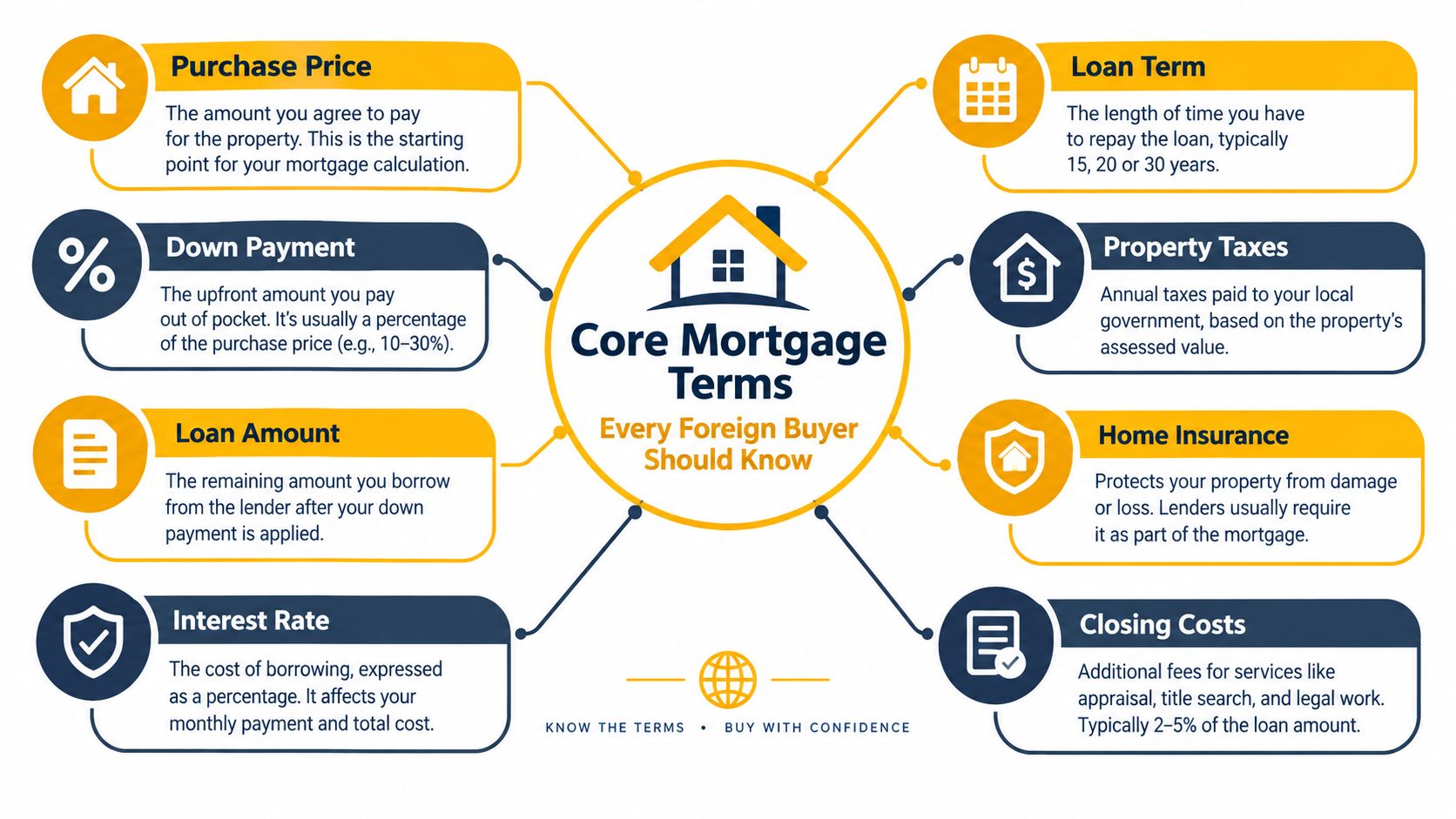
These definitions control the calculations later. Non-resident status affects lender policy, LTV determines the principal, the tasación can create a funding gap, and ITP, AJD and the NIE shape the legal and cash requirements. If one of these terms is unclear, pause before signing a reservation contract.
How Much You Can Actually Borrow
For most non-resident buyers, borrowing capacity is governed by three separate tests. Passing one doesn't guarantee approval because the lender also needs a satisfactory property valuation and a complete source-of-funds file.
The property test
The usual lending range for non-residents is 60% to 70% LTV, and the loan is generally based on the lower of the purchase price or the bank's appraisal value. A property agreed at €300,000 and valued at €290,000 doesn't receive the same maximum loan as a property valued at the contract price.
Assume a lender accepts 65% LTV on a €290,000 valuation. The mortgage would be €188,500, leaving the buyer to provide approximately €111,500 towards the price before taxes and fees. The agreed price is €300,000, so the valuation gap is not academic. It changes the cash contribution immediately.
The affordability test
Lenders commonly assess total debt service against income, with foreign-buyer guidance frequently placing the cap around 30% to 35% of net monthly income. The bank considers the proposed Spanish mortgage alongside existing loans and other documented commitments. It may also assess affordability under less favourable interest assumptions rather than relying only on the opening payment.
A couple earning €5,500 net per month might service a €190,000 loan comfortably within a lender's model, while a €240,000 loan could fail once the bank applies its affordability assessment. Those figures are an illustration of underwriting logic, not a promised approval. Existing debt, age, term, currency and income stability can change the result.
Driver | Rule of thumb | Worked figure (€300,000 property) |
|---|---|---|
LTV | 60% to 70% for many non-residents | 65% of €290,000 valuation = €188,500 |
Valuation basis | Lower of price or appraisal | €290,000 valuation, not €300,000 price |
Buyer contribution to price | Balance after mortgage | Approximately €111,500 |
Debt service | Commonly around 30% to 35% of net income | €5,500 net income may support €190,000 more readily than €240,000 |
The income visibility test
A bank wants income it can trace, understand and continue to assess. Salaried applicants usually provide employment contracts, payslips and tax returns. Self-employed applicants face more questions because the lender must separate recurring business income from dividends, one-off profits or retained company cash.
Bonus-heavy compensation creates a similar problem. A bank may discount variable pay if it isn't consistent or sufficiently evidenced. Rental income can help, but only when the applicant documents ownership, tenancy arrangements, receipts and tax treatment. Multiple currencies add another layer because the bank must assess exchange-rate risk.
The appraisal gap is where many purchases die. Buyers focus on the headline LTV, then discover that their valuation is lower than the contract price and their available cash isn't large enough to cover the difference. Commissioning the appraisal early and making the reservation contract subject to finance can protect the transaction.
Documents Lenders Expect From Foreign Applicants
A foreign mortgage application succeeds or stalls on document quality. Banks aren't impressed by a large folder if the statements are incomplete, the tax years don't match or the deposit cannot be traced.
Identity and residency
Prepare your passport, NIE and, where available, empadronamiento or evidence of your Spanish address. The lender needs to identify every borrower and establish whether income and tax obligations sit in Spain or abroad. Non-resident status doesn't remove the identification burden. It increases the need for clarity.
Income and employment
Employees should expect to provide recent payslips, an employment contract, tax returns and the relevant annual income certificate, such as a P60 or equivalent. Self-employed applicants generally need personal tax returns, corporate accounts where relevant and a certificate from the relevant tax authority.
Underwriters use payslips to confirm salary, contract type and employment continuity. Tax returns help them reconcile declared income with the amounts appearing in bank accounts. For bonus-heavy workers, provide clear evidence showing whether variable pay is recurring. Don't rely on a verbal explanation after the bank raises a query.
Assets and deposit trail
Foreign buyers commonly provide bank statements from their country of origin and any Spanish account, investment portfolio statements and evidence showing where the deposit came from. The requested history can cover several months, depending on the lender and profile.
The deposit trail is a frequent reason for applications to pause. A transfer from an investment account, a family gift, a property sale or a company account needs supporting evidence. Move funds early and keep the transaction records. Large transfers can trigger compliance questions if the bank can't connect the money to an identifiable source.
Property information
The lender will normally want the signed reservation contract, a nota simple, property details, an energy certificate where applicable and the final bank appraisal. The nota simple allows the bank and your lawyer to inspect ownership, charges and registered information before completion.
A clean property file can't compensate for weak income evidence, but an unclear property file can derail an otherwise strong applicant. Use independent legal representation so someone protects your interests rather than processing the bank's requirements.
Legal and administrative documents
Non-Spanish documents may require a sworn Spanish translation. Some documents also need an apostille under the Hague Convention. Ask the lender and lawyer which documents require formal translation or authentication before ordering them, because requirements vary by document and issuing country.
Organise the application by category, name every file clearly and provide complete pages. A lender can assess a difficult income profile; it can't assess documents that arrive in fragments.
Where to Apply and Which Lender Fits Your Profile
The cheapest advertised rate isn't necessarily the strongest mortgage route. A lender that accepts your income currency, property type and documentation is more useful than a bank that offers a lower rate but rejects your file after the appraisal.
Channel | Typical LTV ceiling | Currency | Non-EU acceptance | Offer-to-decision | Best fit |
|---|---|---|---|---|---|
Spanish retail bank | Often 60% to 70% for non-residents | Usually strongest with euro income | Selective | Can be efficient with a complete file | EU-employed buyers with clear income |
International lender or specialist desk | Profile-dependent, commonly within the non-resident range | Greater flexibility may be available | Generally more accommodating | Often tailored rather than standardised | Non-EU nationals and complex earnings |
Independent mortgage broker | Depends on panel lender | Can match lender to currency | Useful for specialist cases | Panel comparison can reduce unsuitable applications | Remote earners, self-employed buyers and higher-value purchases |
Spanish retail banks can offer strong pricing when the applicant has stable EU employment, transparent tax filings and a conventional property. Their processes may be less comfortable with complicated business structures, non-euro salaries or income assembled from several sources.
International lenders and specialist non-resident desks are often better equipped for non-EU applicants, remote earners and buyers whose income needs more explanation. They may also be more comfortable matching a loan to a higher-value property, but the borrower still needs a strong deposit, a defensible valuation and clear affordability.
An independent broker covering a multi-bank panel can test the case against several policies before a full application. That matters when one bank rejects rental income, discounts bonuses or dislikes a particular currency. The broker isn't a substitute for documentation, and a direct-to-bank applicant may lose access to panel benefits on rate and conditions.
My recommendation: Use a Spanish retail bank first only when your income, tax residence and currency are simple. For non-EU nationals, self-employed applicants, remote earners or buyers of premium stock, start with a specialist desk or independent broker.
AP Properties Spain can also help buyers coordinate property selection, negotiation, legal support and the practical financing conversation across the Costa Blanca and Costa Cálida. It isn't a lender, so treat its role as transaction coordination rather than mortgage approval.
Real Costs of Buying and Financing a Spanish Property
A non-resident buyer should separate three cash requirements: the deposit, the purchase taxes and fees, and the reserves needed after completion. A mortgage normally funds only part of the property price, not the entire capital stack.
For a €350,000 resale property in the Comunidad Valenciana, the following illustration uses a 70% mortgage and a 10% ITP assumption. Regional tax rules differ, so your lawyer or tax adviser must confirm the applicable amount before you commit.
Cost item | Amount (EUR) | % of price |
|---|---|---|
30% deposit | €105,000 | 30% |
ITP at 10% assumption | €35,000 | 10% |
AJD at 1.5% of mortgage deed, approximate | €1,575 | 0.45% |
Valuation | €350 to €500 | Approximately 0.10% to 0.14% |
Notary | €900 to €1,200 | Approximately 0.26% to 0.34% |
Land Registry | €400 to €600 | Approximately 0.11% to 0.17% |
Bank arrangement fee | 0.5% to 1% of loan | Depends on loan size |
Post-completion reserve | 6 to 12 months of mortgage instalments | Not a purchase percentage |
The broader Spanish acquisition cost commonly reaches 8% to 13% of the purchase price, depending on the autonomous community, property type and transaction structure, as outlined in this guide to property tax for non-residents in Spain. Resale properties normally attract ITP, while new builds generally involve 10% VAT plus AJD, making the distinction important from the first offer.
One point needs correction in many buyer spreadsheets. A 70% LTV mortgage on €350,000 leaves a 30% price contribution, so the deposit alone is already €105,000. Once taxes, fees, any valuation gap and a reserve are added, the buyer needs materially more liquidity than the headline deposit suggests. A claim that the total requirement is only 22% to 25% of the price doesn't fit this worked example, because the deposit itself exceeds that range.
Cash discipline closes deals: Keep the deposit, taxes, fees, valuation-gap allowance and post-completion reserve available before signing. Don't assume the bank will increase the loan because the contract price is higher.
The appraisal gap remains the most common last-minute funding problem. If the valuer records a lower figure, the lender's maximum falls and the buyer must renegotiate, add cash or withdraw under the contract terms.
The Application Timeline From Offer to Keys
A non-resident mortgage on the Costa Blanca commonly takes 8 to 12 weeks from an accepted offer to completion, although the exact sequence depends on the lender, property and readiness of the documents.
- Mortgage pre-assessment: The lender or broker reviews income, liabilities, currency and available cash before you commit fully.
- Reservation and property review: The bank receives the reservation contract and property information, while your lawyer checks the legal position.
- Appraisal booking: An approved valuer arranges the tasación. In Alicante province, appointments can take 2 to 3 weeks during peak season.
- Formal credit review: The lender analyses the appraisal, affordability, source of funds and compliance documents.
- NIE and transfer checks: Any missing NIE work must be completed, and the bank may request evidence for transfers above €50,000.
- Notary and registration: The purchase and mortgage deeds are signed, funds are released once conditions are satisfied, and the mortgage is registered with the Property Registry.
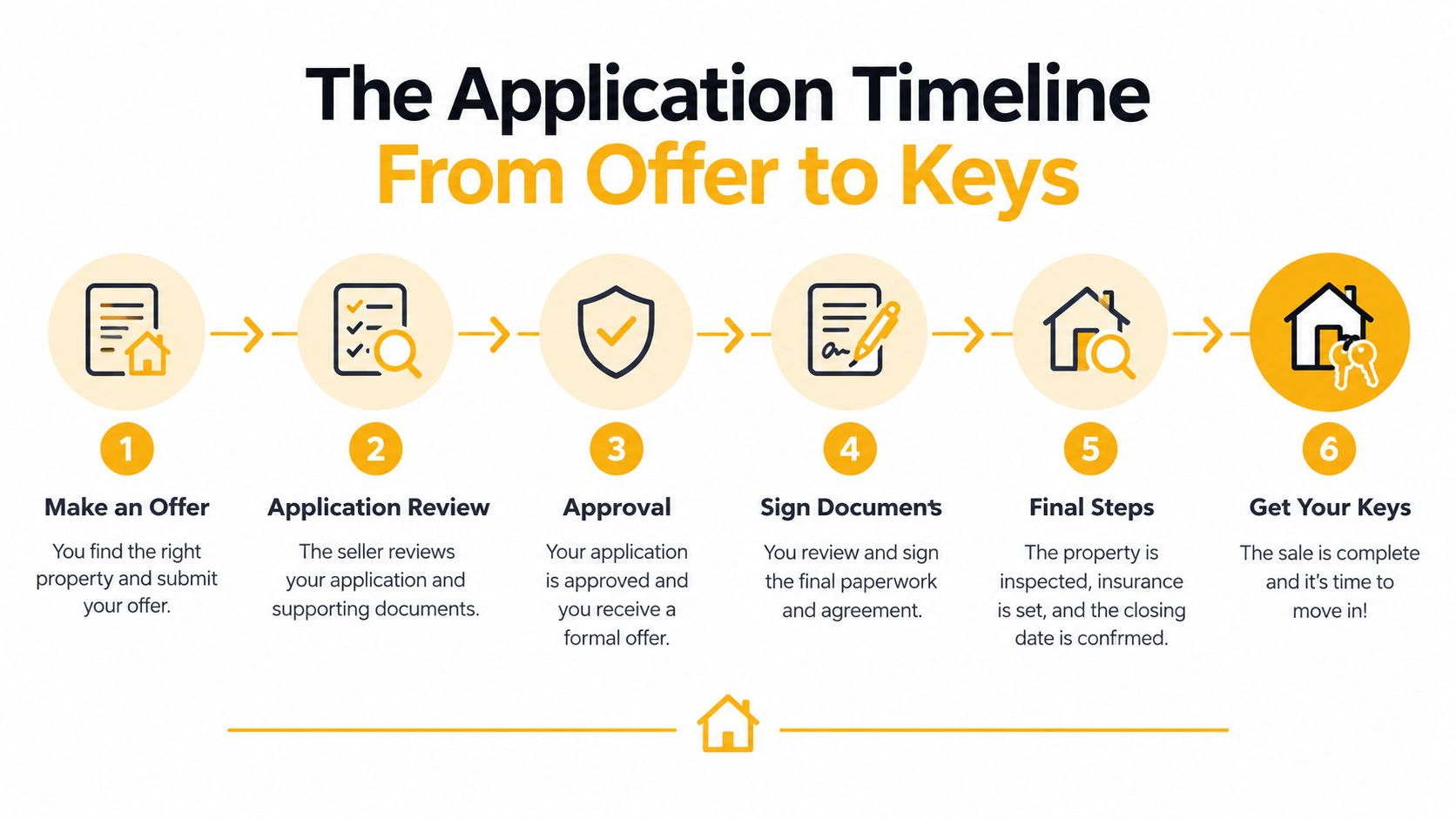
The NIE appointment backlog can reach 4 to 6 weeks, so applying only after finding the property creates avoidable pressure. A lender also won't release funds until the valuation confirms the permitted LTV margin. If the appraisal is delayed, the legal review is incomplete or the transfer trail is unclear, the notary date may move.
Book the appraisal as soon as the bank accepts the property details. Give the lawyer and lender the same source-of-funds documents, and don't schedule travel around a completion date until the bank confirms that the mortgage deed is ready for signing.
Deciding Whether a Mortgage Makes Sense in 2026
A mortgage makes sense for a foreign buyer in 2026 when the borrower has 35% to 40% of the purchase price in liquid funds, stable foreign income that survives a 3x stress test, and a clear intention to hold the property for 5 to 7 years. Those are my decision thresholds, not lender guarantees. They protect the buyer from relying on the maximum theoretical loan.
The market remains significant for international purchasers. CaixaBank Research reported that foreign buyers acquired roughly 133,000 homes in the 12 months to Q1 2025, equal to 18.0% of Spanish home sales, while the Banco de España annual report provides the wider financing context. Yet a strong market doesn't make every borrowing decision sensible.
A mortgage is less attractive when you're financing 70% of a holiday home used for only four weeks each year. Carrying costs, currency exposure, interest and limited resale liquidity can outweigh the benefit of keeping capital invested elsewhere. The average rate on new Spanish home mortgages was 2.98% in May 2026, the average term was 25 years, and 60.9% of loans were fixed-rate. Compare the actual offer, not the market average.
Three questions before signing
Can non-EU citizens obtain a Spanish mortgage? Yes, but lenders scrutinise income, currency, tax documents, existing liabilities and source of funds more closely. Non-EU applicants often need a specialist lender or broker rather than a standard branch application.
Can the mortgage cover purchase taxes? Usually, no. Plan to fund taxes and acquisition costs separately. Regional rules mean the total acquisition cost can commonly reach 8% to 13%, as noted above.
What happens at the end of a fixed-rate period? Read the mortgage deed. The loan may move to a variable rate, be re-priced under the agreed formula or require a new arrangement, depending on the product. Ask for the post-fixed-period calculation before signing, not when the fixed term expires.
If your cash reserve is thin, your income depends on uncertain bonuses, or the purchase only works at the lender's maximum valuation, wait. A strong property can still become a poor purchase when the financing leaves no room for currency movements, repairs or a delayed rental season.
If you're buying on the Costa Blanca or around La Romana, AP Properties Spain can help you assess the property, coordinate legal and valuation steps, and prepare for the cash requirements that lenders will examine. Visit the team before signing a reservation contract, so your mortgage plan matches the actual property and your financial profile.
Share