





Luxury Villas Spain: A Complete Guide to Costa Blanca
You're probably looking at a shortlist that looks great on paper, then discovering the hard part starts when you land in Alicante, start driving between viewings, and realise the villa you liked online is already spoken for. That's the market for luxury villas Spain on the eastern coast, not glossy listings, but a race for the few homes that still meet the brief once viewings, legal checks, and financing are all in play.
If you're trying to buy well, you need a sharper filter than “sea view and nice pool”. The right decision depends on where international demand is concentrated, which coast matches your lifestyle, whether you're buying to live or to invest, and how you handle finance, tax, and handover without drifting into expensive delays.
What This Guide Will Help You Decide
A British couple lands at Alicante airport in late September with seven viewings lined up across three coastal areas. By day two, the villa they bookmarked online is under offer, and the closest alternatives are already priced well above what their research suggested. That's normal now, and it's why buying a luxury villa in Spain isn't a scavenger hunt for more listings, it's a decision exercise.
The eastern coast deserves the focus because that's where many buyers still find the best mix of climate, accessibility, and serious villa stock. Costa Blanca, Costa Cálida, and Costa de Almería each solve a different problem, and if you treat them as one market, you'll waste time and overpay for the wrong fit.
The four questions that matter
Start with lifestyle. Do you want an established, year-round coastal environment, or do you want more privacy, more land, and less footfall?
Then ask where competition is fiercest. In the prime villa pockets, supply is tighter than broad market commentary suggests, so waiting for “better value” often just means facing a smaller pool of comparables and a higher asking price later.
Practical rule: if you can't describe your ideal coast in one sentence, you're not ready to book flights for viewings.
The rest comes down to purpose and process. Buying to live in, buying to rent out, financing as a non-resident, and planning renovation or completion all pull in different directions. This guide separates those choices cleanly so you can shortlist faster, negotiate harder, and avoid the common mistake of choosing a villa that looks right but behaves badly in real ownership.
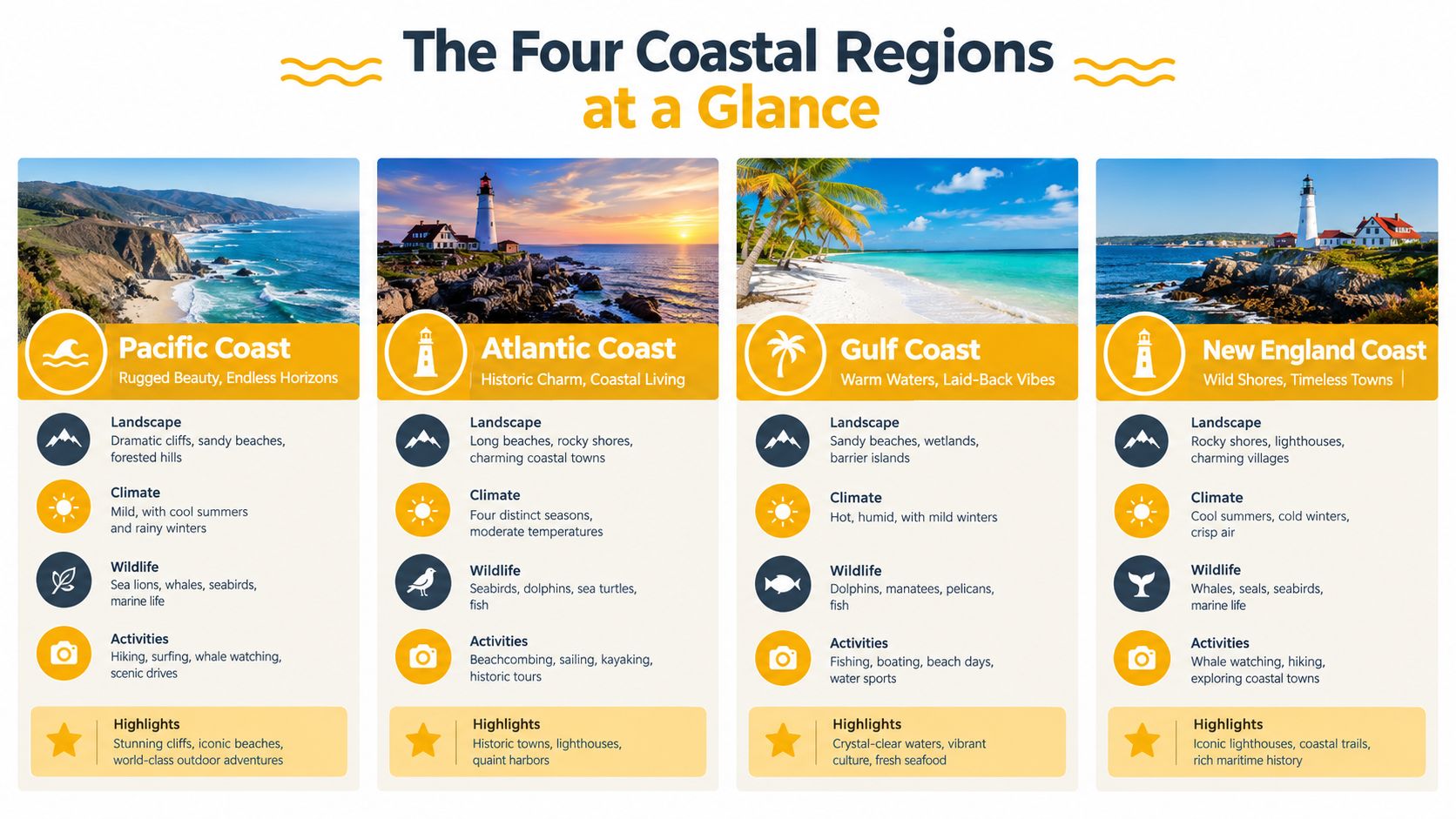
The Four Coastal Regions at a Glance
Costa Blanca, the mature international coast
Costa Blanca is the most developed of the three eastern coasts, with a deep villa market stretching from Alicante up to Dénia. It's the obvious choice if you want infrastructure, international services, and the widest choice of villa styles, from frontline homes to gated hillside properties.
The dominant buyer profile is still international, especially British, German, and Scandinavian. The trade-off is simple, more convenience and more resale depth, but also more competition for prime inventory and less privacy in the most established zones.
Costa Cálida, the value-and-space alternative
Costa Cálida feels less compressed. Around Murcia and the Mar Menor, the coast is usually the better fit for buyers who want larger plots, a quieter pace, and a little more room between neighbours.
The buyer mix is broader and less saturated, which matters if you're after space rather than status. You give up some of the dense year-round service network of Costa Blanca, but you gain breathing room and, in many cases, a more relaxed ownership experience.
Costa de Almería, the least mainstream option
Costa de Almería is the driest and least internationalised of the three, which is exactly why some buyers prefer it. If you want privacy, newer housing stock, and a coast that hasn't been fully absorbed into the standard foreign-buyer circuit, it deserves attention.
This is the best fit for buyers who care more about seclusion and build quality than being close to a busy expat ecosystem. You won't get the same level of established villa density as Costa Blanca, but that's part of the appeal.
Costa del Sol, broader context only
Costa del Sol sits outside this guide's main focus, but it still matters as a benchmark. It's the heavyweight for liquidity, international schools, and trophy pricing, which is useful context if you're comparing Spain's established luxury routes.
The key difference is strategic. This guide is built for buyers who want to understand the eastern coast first, then use Costa del Sol as a reference point rather than the default answer.
Where International Demand Is Actually Concentrated
The headline story is easy to oversimplify. Spain's luxury housing market is clearly international, with nearly 100,000 properties bought by non-Spaniards in the most recent year cited by the source, and around 3,240 homes larger than 180 m² and priced above €1.05 million sold nationwide in the first half of 2025, equal to 0.87% of all housing transactions. That tells you the high-end segment is small, concentrated, and much less forgiving than casual buyers assume.
Alicante pulls more foreign competition than most buyers realise
The more useful signal is where foreign demand clusters. Alicante accounted for 43.29% of transactions by foreign buyers in 2025, ahead of Málaga, the Balearics, and Murcia (Idealista). A separate market report also put foreign demand at 49.7% of high-end villa demand on the Costa Blanca, and at 84% in the northern stretch covering Altea, Calpe, Moraira, and Benissa.
That's why prime stock in places like Jávea, Calpe, Moraira, and nearby coastal pockets doesn't sit around for long. Buyers are chasing the same limited family of villas, sea views, and gated settings, and that keeps pressure on the best listings even when the wider Spanish market softens.
The real supply problem is in the prime band
Independent coastal reporting shows that 83% of foreign purchases in Spain were completed in coastal locations, with overseas buyers dominating the luxury segment and coastal provinces like Alicante remaining especially active (Accumin). The practical conclusion is blunt.
In the exact submarkets international buyers want, the problem is not demand. It's inventory.
Coastal Region | Foreign Buyer Share | Villa Price Band (€) | Average Days on Market |
|---|---|---|---|
Costa Blanca | High, especially in the prime north and coastal pockets | Premium coastal villas often sit well above provincial averages | Short in the best locations |
Costa Cálida | Moderate to high in select areas | Generally lower than Costa Blanca for comparable space | More variable |
Costa de Almería | Lower overall, more selective foreign demand | Wider value spread, fewer trophy benchmarks | Often slower, with fewer comps |
Costa del Sol | High and highly liquid | Trophy pricing at the top end | Fastest in the most established enclaves |
Waiting six months usually costs more than negotiating hard today, because the best villas get absorbed before the market can produce a neat replacement.
Buying a Home to Live In Versus Buying to Invest
This is not a lifestyle question dressed up as an investment question. It's a fork in the road, and the property you should buy changes completely depending on which side you choose.
If you're living in it, comfort beats yield
A full-time home needs winter livability, not just summer glamour. That means south-facing terraces, indoor-outdoor flow that still works in shoulder season, decent proximity to schools, shops, and medical services, and a community that doesn't empty out for half the year.
A frontline villa in Jávea behaves like a lifestyle asset because the buyer is paying for atmosphere, privacy, and day-to-day enjoyment. If you're planning to use the house properly, don't get distracted by rental logic that doesn't match your life.
If you're investing, the property has to work harder
Investors should think in terms of layout, maintenance, and licensing readiness. A villa that needs constant attention, awkward staffing, or heavy seasonal management can look attractive and still perform poorly.
Practical rule: if the home can't be run cleanly by a local manager, it isn't a clean investment, no matter how good the view is.
Decision Factor | Buying to Live In | Buying to Invest |
|---|---|---|
Priority | Comfort, usability, community | Letting potential, resilience, ease of management |
Best features | Winter sunlight, terraces, storage, schools nearby | Licence-ready layout, low maintenance, efficient circulation |
Cost focus | Lifestyle value and annual holding cost | Net return after fees, tax, and occupancy gaps |
Best fit | Mature villa in an established coastal area | New-build or efficient resale with lower friction |
Holding costs matter either way. Costa Blanca municipal property tax rates vary sharply, from 0.400% in Torrevieja to 1.050% in Dénia, with Calpe at 0.867%, Rojales at 0.700%, and Guardamar del Segura at 0.950%. If you're buying to live, that changes annual budgeting. If you're buying to invest, it changes net return.
Financing a Luxury Villa as a Non-Resident Buyer
Spanish banks don't finance luxury villas on optimism. They finance documentation, income quality, and asset clarity. For non-residents, the practical ceiling is usually a 60 to 70% LTV structure, and the better the property quality and the clearer the file, the easier the process tends to be.
What lenders actually want
You'll need the basics lined up before you start negotiating seriously. That means your NIE, proof of income that's translated and apostilled, the last two years of tax returns, and a clean six-month bank statement. If those aren't ready, you're not a real buyer in the bank's eyes, even if you've got the deposit.
Prime coastal stock can also face tighter bank scrutiny. A villa in Jávea, Altea, or similar top-end locations can price well, but the lender still wants to see clean comparables and a property that makes sense on valuation.
Tax and holding cost differences are not minor
For resale homes in the Valencian Community, the property transfer tax changed on 1 June 2026 from 10% to 9% for properties priced up to €1,000,000, while homes above that threshold remain taxed at 11% (Idealista). That matters across Alicante and the Costa Blanca, including Jávea, Calpe, Dénia, Moraira, Torrevieja, and Orihuela Costa.
For annual costs, the municipal spread is just as important as purchase tax. A villa that looks slightly cheaper on day one can become more expensive over time if the local tax base is harsher and the maintenance profile is heavier.
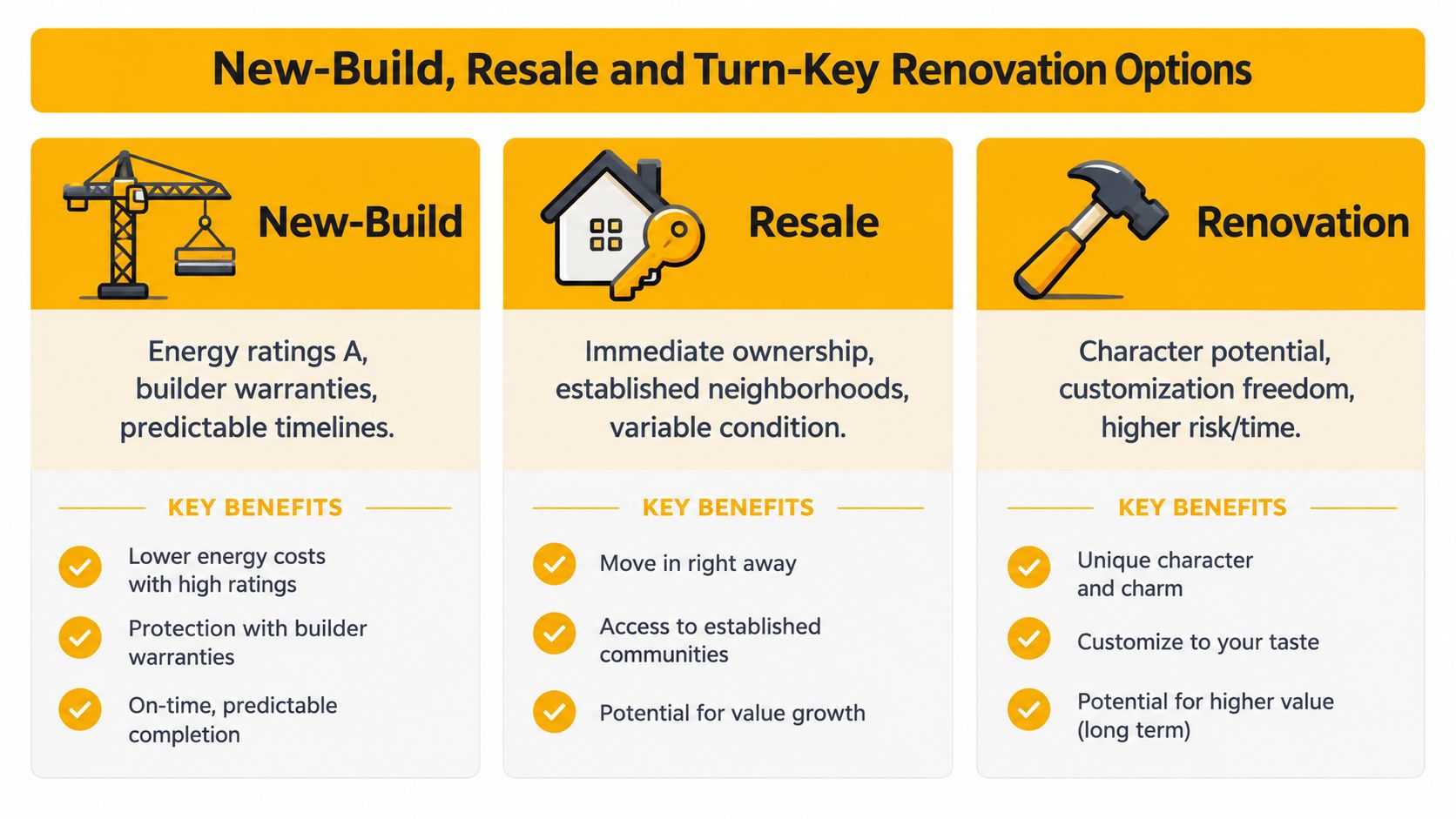
New-Build, Resale and Turn-Key Renovation Options
The acquisition path matters as much as the postcode. I see too many buyers start with a location and only later discover that the build type makes the location either easy or painful.
New-build
New-build wins on energy ratings, builder warranties, and predictable delivery. Banks also tend to read post-2020 build standards more comfortably, which helps when a non-resident buyer needs financing discipline.
It loses ground when the premium becomes too wide or the plot is too small for the setting. In the most established coastal areas, new-build can feel efficient but bland, and that's the trade-off.
Resale
Resale delivers character, mature gardens, and better plots in places that have already proved themselves. It is where buyers often find stronger long-term satisfaction, especially on coastlines where the best positions were built first and the high-quality land is already occupied.
The downside is obvious, condition varies, and the purchase only makes sense if you're prepared to inspect properly and budget carefully. A resale villa with a strong plot beats a glossy new build in the wrong place almost every time.
Turn-key renovation
Turn-key renovation only works when there's a trusted team controlling the design, permits, and build from the start. Done well, it cuts a lot of coordination pain and keeps the project coherent.
Done badly, it becomes layered mark-up and vague accountability. A simple refurbishment should stay simple, so if every contractor has added their own version of the budget, you're no longer buying certainty, you're buying noise.
Bringing It All Together with AP Properties Spain

The cleanest way to buy on the eastern coast is to treat the process as one chain, not a string of separate decisions. A local advisor can start with regional shortlisting, then move into on-the-ground price checks, legal coordination through the notary process, and post-purchase support for rental management, renovation oversight, and tax filings.
What the sequence should look like
First, narrow the coast before you narrow the villa. A structured brief should decide whether you're really in Costa Blanca, Costa Cálida, or Costa de Almería, because that choice filters everything else.
Next comes verification. Independent viewings are useful, but they don't tell you whether the asking price sits above recent local comparables, whether the build quality matches the photos, or whether the property has the paperwork to complete cleanly.
Practical rule: if a villa can't be priced against local evidence, it's not ready for a serious offer.
Then comes negotiation and legal coordination. The best purchases stay calm because someone is managing the sequence, not improvising it. After completion, the work isn't over if you're planning rentals, a refurbishment, or regular compliance filings.
AP Properties Spain fits into that flow as a local consultancy for buyers on Costa Blanca and Costa Cálida, with support that runs from discovery and area guidance through negotiation, legal coordination, renovation oversight, and completion. If you're starting from zero, prepare your NIE timeline, proof of funds, and residency status before the first contact so the conversation starts at the right level, not at square one.
If you're serious about buying a villa on the eastern Spanish coast, AP Properties Spain can help you shortlist the right areas, verify the price, and manage the transaction without unnecessary detours. Visit AP Properties Spain and start with a focused search built around your budget, purpose, and the coast that actually fits how you want to live.
Share