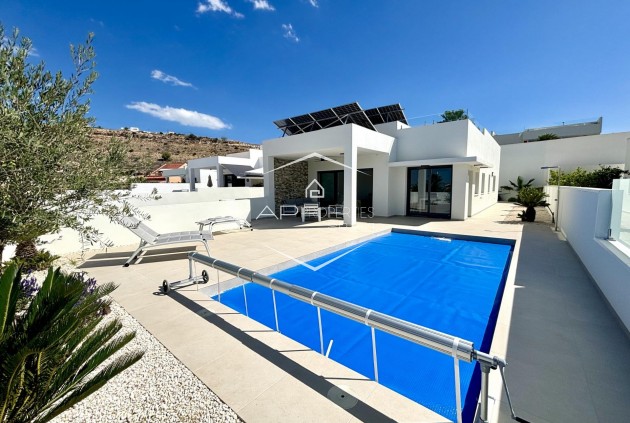






8 Renovation Examples for Costa Blanca Homes
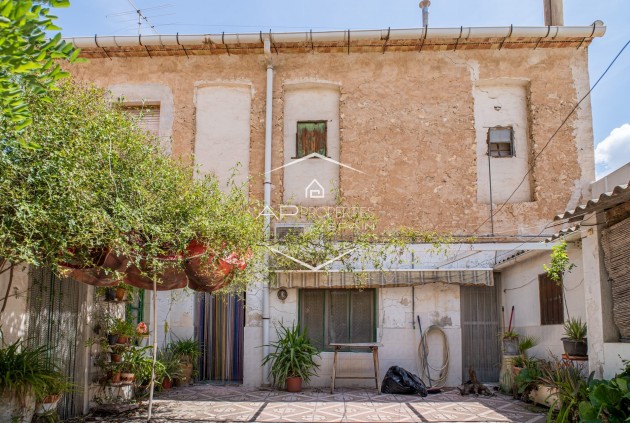
A buyer in La ROMA, Alicante, has found the kind of property that looks promising but not immediately liveable. It might be a villa with dated services, an apartment with an awkward kitchen, or a finca whose character is worth preserving but whose layout, insulation and bathrooms need careful attention. The important question is not just, “What could this home look like?” It's, “Which renovation will improve daily life, marketability or investment value without creating avoidable risk?”
The renovation examples below are decision-making models, not descriptions of individual projects. Each one considers property type, intended outcome, design choices, budget category, timeline drivers, permissions, likely value positioning and the coordination required for a turn-key result in La Romana, Alicante and the wider Costa Blanca. Costa del Sol properties aren't the focus here.
The right architect can test whether an idea is structurally and legally realistic. The right builders can sequence demolition, services, finishes and commissioning. AP Properties Spain can help connect a property search with trusted renovation coordination, so the purchase decision and the improvement plan are considered together.
1. Mediterranean Kitchen Renovation with Open-Plan Living
An open-plan kitchen can transform a dark villa or apartment into a social, light-filled home. It can also create expensive complications if someone removes a wall before confirming whether it carries structural loads or contains essential plumbing, electrical circuits or ventilation routes.
A structural engineer should assess the existing layout before demolition. The architect then needs to resolve the new circulation, fire and building requirements, service routes and finish schedule. In an apartment, the community of owners and communal elements may restrict changes to façades, structural components or shared service shafts.
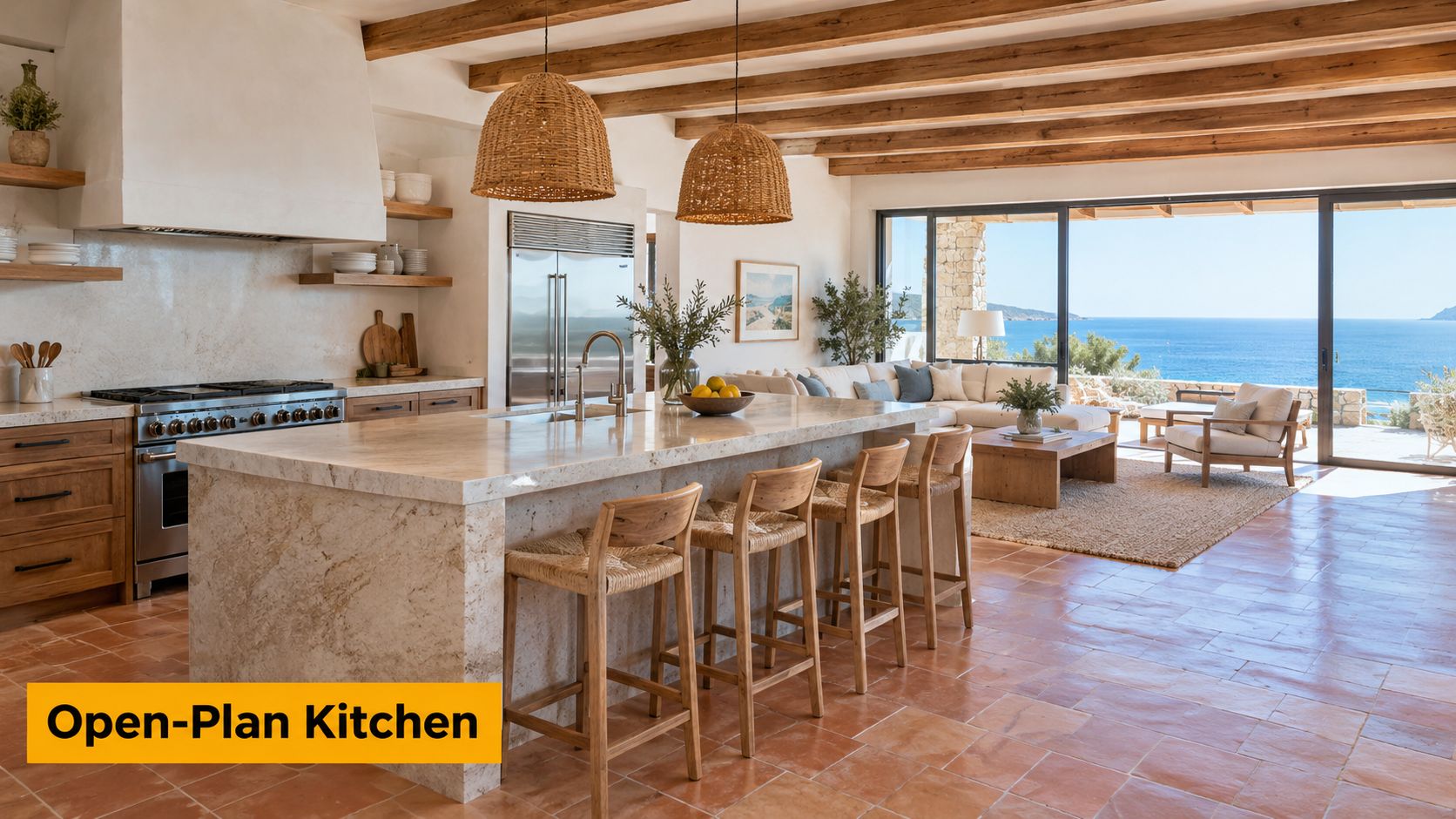
A mid-to-high renovation budget category is appropriate when the work includes structural modifications, bespoke joinery and new electrical and plumbing infrastructure. The timeline depends on approvals, engineering, manufacture of cabinets, worktop templating and appliance delivery. A kitchen that appears visually simple can involve several trades working in a strict sequence.
Traditional materials can keep the home rooted in its setting. Terracotta, timber beams, lime-toned walls and natural stone can sit comfortably beside a contemporary island, concealed storage and efficient appliances. The strongest resale positioning usually comes from a coherent, durable design rather than an overly personal statement.
Practical rule: Don't remove walls until the architect, engineer and builder have agreed where every service will run.
Before demolition, confirm:
- Extractor capacity: Specify a properly ducted hood where possible, particularly in an open living area.
- Island circulation: Check that doors, walkways and seating won't obstruct one another.
- Lighting zones: Separate task, ambient and dining lighting so the kitchen doesn't dominate the room.
- Joinery quality: Choose cabinet finishes that connect visually with the living space.
- Infrastructure: Map sockets, water, waste, ventilation and appliance loads before work starts.
Scenarios such as a panoramic villa in Calpe, a whitewashed beachfront apartment in Denia or a Jávea penthouse overlooking the coast all benefit from the same discipline. AP Properties Spain can help a buyer assess whether the property's potential justifies this level of intervention and coordinate trusted professionals once the purchase is progressing.
2. Bathroom Suite Modernization with Spa Elements
A bathroom is often a contained renovation with a noticeable effect on comfort. For an international owner using a property as a second home, a well-planned suite can deliver a boutique-hotel feel without changing the entire floor plan.
The attractive fittings come later. First, inspect waterproofing, drainage falls, pipe access, ventilation and signs of concealed moisture. A rainfall shower, freestanding bath or heated floor won't compensate for a poorly sealed wet area. Coastal properties also need hardware and finishes that tolerate humid, salty air.
This is a high cost-per-square-metre category, because specialist labour and fixtures occupy a relatively compact space. Product lead times, custom glass, specialist tile installation and unexpected damage behind existing finishes can all extend the programme. Keeping the plumbing layout broadly in place may reduce disruption, but that decision should follow a spatial and technical assessment rather than habit.
A marble rainfall shower, dual vanity and layered lighting may suit a master bathroom in an Alicante villa. A Torrevieja penthouse might prioritise two efficient spa-style bathrooms, while a Guardamar townhouse could use a soaking tub and enclosed shower where the household values relaxation over maximum floor area.
Design details that protect long-term usability
Neutral tiles generally give buyers more flexibility than highly distinctive patterns. Dimmable lighting should include functional illumination at mirrors, softer ambient light and safe illumination around the shower and floor. A freestanding bath needs enough clearance for cleaning, maintenance and comfortable access.
The architect or designer should coordinate spatial planning, accessibility and compliance. The plumber must confirm pressure, waste connections and service access, while the installer is responsible for accurate falls, seals and tile work. AP Properties Spain can help coordinate these roles as part of a wider property purchase and renovation plan.
Check the following before approving the specification:
- Waterproofing evidence: Request the system details and installation documentation.
- Ventilation: Confirm how humidity will leave the room.
- Maintenance access: Keep valves, traps and key connections serviceable.
- Coastal resistance: Specify suitable metals, fixings and finishes.
- Future flexibility: Consider whether the layout can accommodate changing mobility needs.
The value case is usually stronger in daily usability and buyer appeal than in an automatic financial return. A beautiful bathroom still needs to be comfortable, repairable and proportionate to the property.
3. Outdoor Terrace and Pergola Extension
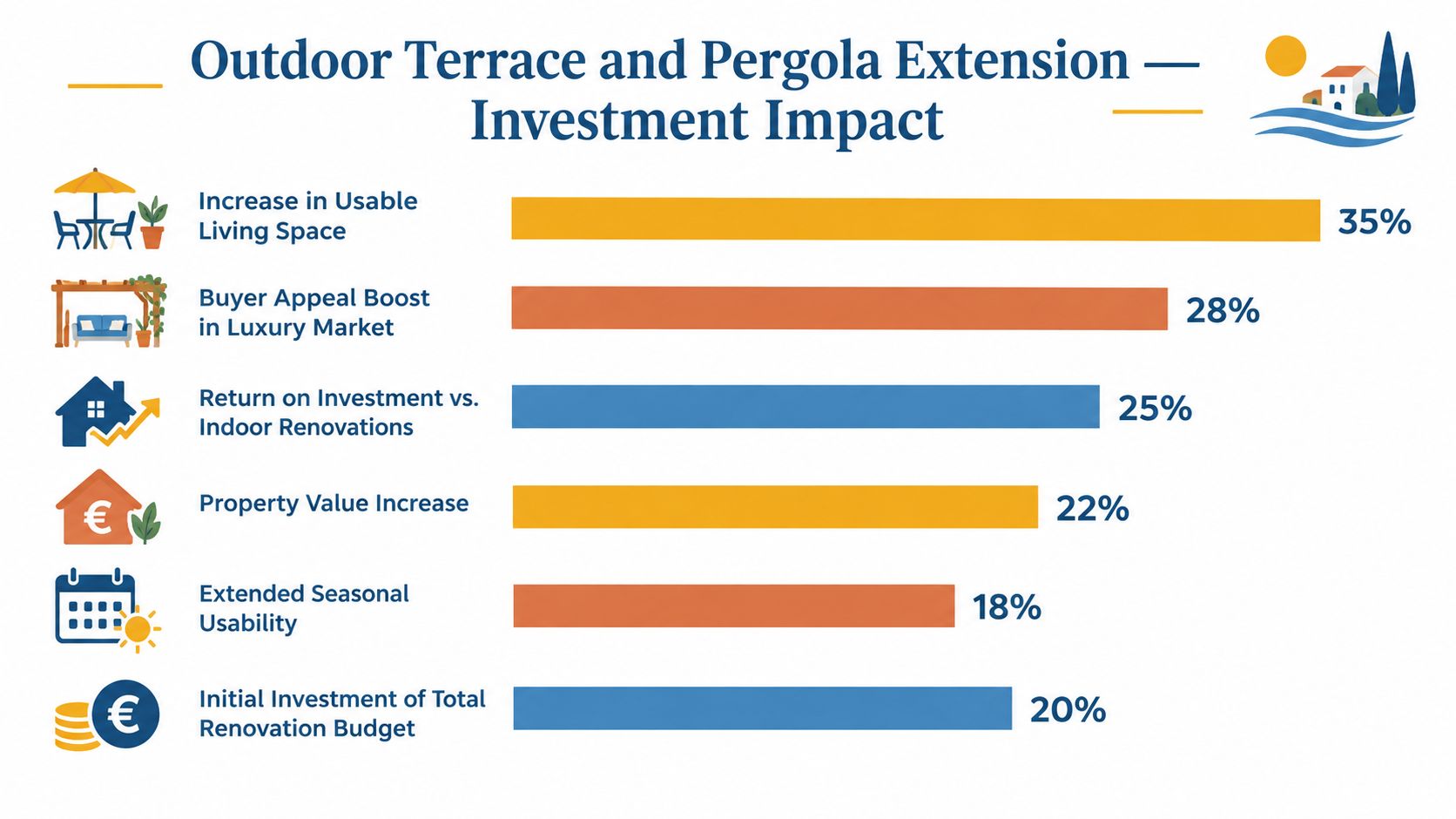
A neglected terrace can become one of the most useful parts of a Costa Blanca home, but a pergola isn't automatically a cosmetic improvement. The legal and technical position changes when the work adds a fixed structure, alters drainage, affects façades or connects new electrical and plumbing services.
Start with the way the space will be used. A terrace that looks impressive in a photograph may be uncomfortable in strong wind, exposed to afternoon glare or too small for dining and lounging at the same time. Test furniture zones, shade movement, privacy and access before selecting materials.
The budget is highly variable. A surface replacement and lighting upgrade sit in a different category from a structural pergola, outdoor kitchen, drainage redesign and new hardscape. The timeline may depend on permissions, weather, manufacturing, delivery and whether machinery can reach the site without damaging existing landscaping.
A multi-level terrace in a Calpe villa needs a different response from a rustic outdoor kitchen beside an Alicante hinterland finca. A Jávea apartment may have a smaller footprint but greater value in careful furniture planning and a retractable shade system. In each case, view orientation should guide the layout, not dictate it.
An application plan for coastal outdoor space
- View alignment: Place the main seating where the sea remains visible from the most useful positions.
- Water management: Build falls and drainage that prevent pooling against doors and walls.
- Material selection: Use finishes and fixings tested for salt exposure where relevant.
- Shade control: Consider wind loading and whether the pergola can retract safely.
- Lighting layers: Combine task lighting, low-level path lighting and softer entertaining light.
- Service routes: Plan power, water, waste and appliance ventilation before paving closes the ground.
An architect can test the design against planning and building requirements. Builders should sequence drainage, foundations, services, paving and planting so finished surfaces aren't repeatedly disturbed. AP Properties Spain can coordinate trusted renovation professionals when an outdoor improvement forms part of a broader turn-key plan.
Alicante province recorded 11,011 housing projects begun in 2025, the highest annual total since 2008 and 31.8% above the 2024 figure, according to reported Alicante housing activity. That figure isn't a renovation measure, but it shows the regulated building environment in which extensions, refurbishments and outdoor improvements are commissioned.
4. Energy Efficiency and Climate Control System Upgrades
A La Romana villa with high summer cooling demand needs a different energy plan from an Alicante apartment used mainly for holidays. The right decision depends on roof condition, orientation, occupancy, wiring, insulation, glazing and the available electricity connection. Begin with those constraints, not a shopping list of solar panels, heat pumps and smart controls.
An energy assessment should inspect the roof and external walls, locate air leakage and thermal bridges, review existing heating and cooling equipment, and model likely demand. Installing a heat pump before correcting envelope weaknesses can leave the system oversized, inefficient or unable to provide consistent comfort.
The investment case has three parts: lower operating costs, better year-round comfort and potential appeal to future buyers. Indicative budget and programme vary with access, fabric repairs, electrical upgrades, planning requirements and whether the property remains occupied. Coastal exposure, salt air and holiday-use patterns also affect equipment selection and maintenance.
A monitored Spanish residential retrofit combining external insulation, replacement windows and roof insulation achieved a 58.42% reduction in heating energy consumption compared with the original building. It used approximately 80 mm of exterior rock wool and 120 mm of roof rock wool, while simulations estimated post-renovation consumption at about 60 kWh/m²·year, as documented in the Spanish retrofit record. Coastal homes have different heating loads, so this is a technical benchmark, not a promise for a Costa Blanca property.
Choose measures in the right order
- Audit the envelope: Check roof continuity, shading, glazing and thermal bridges before selecting equipment.
- Model actual use: Account for occupancy, holiday periods and preferred comfort levels when sizing systems.
- Test solar feasibility: Review orientation, shading, roof structure and grid requirements.
- Coordinate ventilation: Improve air quality without compromising energy performance.
- Commission controls properly: Smart thermostats add little if installers leave systems poorly configured.
- Plan maintenance: Confirm who will service specialist equipment after handover.
The Vitoria-Gasteiz Coronación district renovation upgraded 320 dwellings and five tertiary buildings. District-heating energy use fell from 151 to 70 kWh/m²·year, approximately a 54% reduction, alongside envelope improvements and a biomass-chip heating system, according to the district renovation study. For Costa Blanca apartments, the practical lesson is coordination between owners, architects, installers and technical teams.
The architect handles design and approvals. Accredited technicians install, test and commission the systems. AP Properties Spain can connect a buyer's property search with a trusted renovation network, helping identify technical limitations before a turn-key project begins.
5. Pool and Water Feature Installation or Renovation
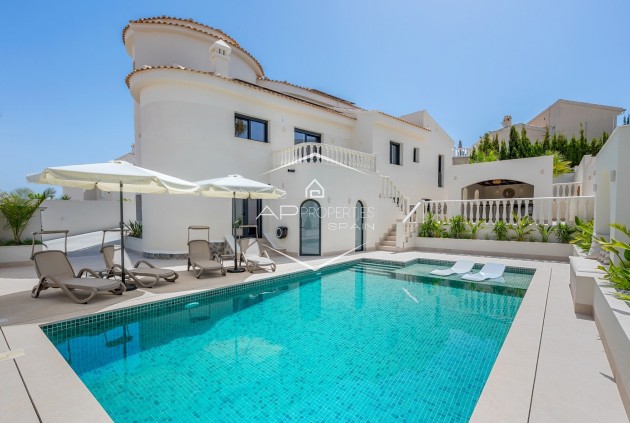
A pool should be assessed as part of the site, not added as an isolated luxury feature. Its position affects terrace access, garden maintenance, privacy, drainage, safety and the amount of usable outdoor space left around it.
For a new pool, investigate ground conditions, excavation access, structural design, filtration, water treatment and approvals. For an existing pool, compare renovation with replacement. Cracked finishes or tired coping may be manageable, while persistent leaks, poor circulation or an obsolete plant room can make a more extensive intervention sensible.
This is one of the most substantial outdoor renovation categories. The cost category depends on excavation, access, structure, finishes, equipment, heating, landscaping and retaining work. The timeline depends on design approvals, ground conditions, specialist trades and weather. A quotation that excludes drainage, plant-room upgrades or reinstatement of surrounding areas isn't a complete comparison.
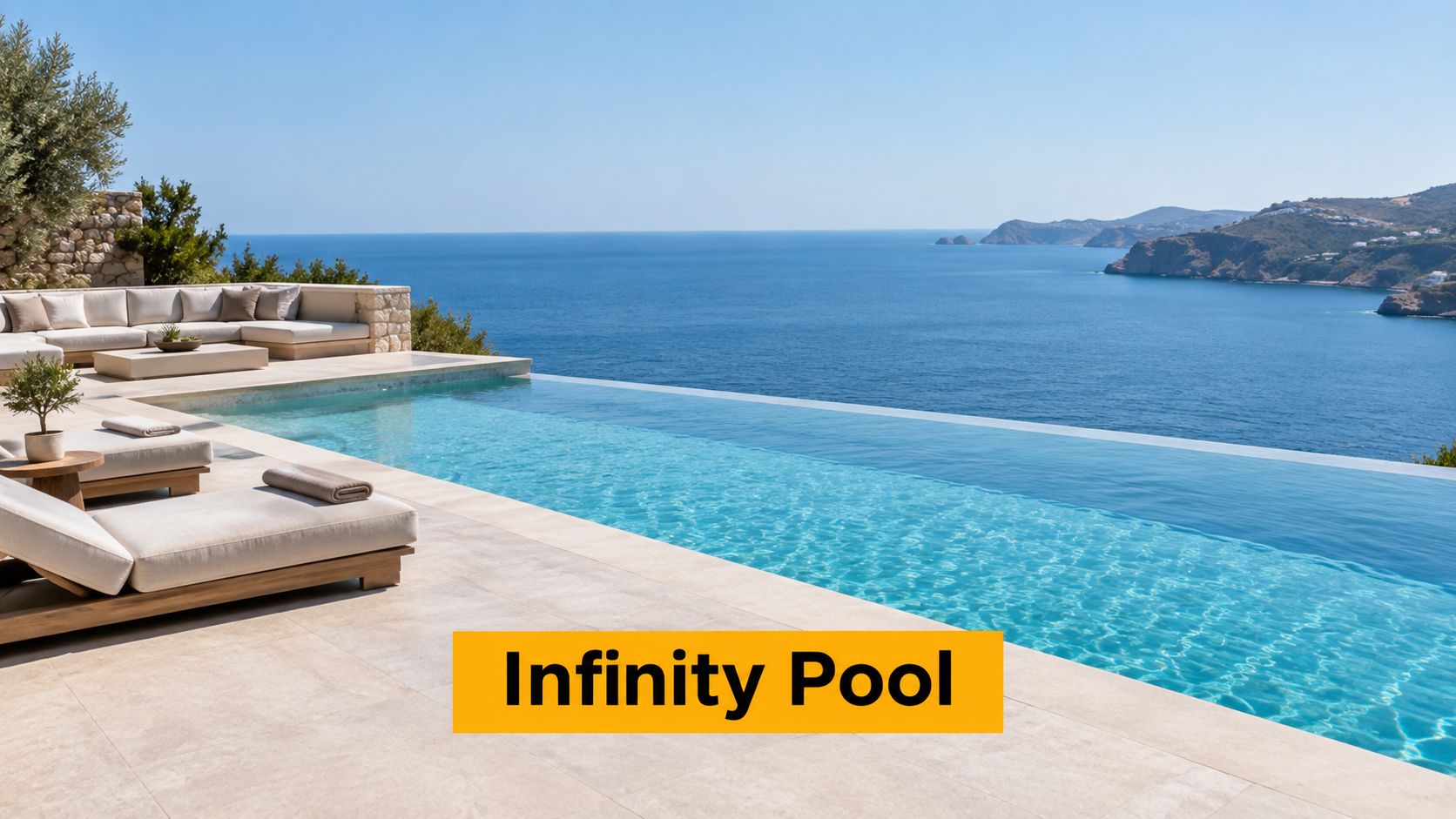
An infinity pool may suit a hillside property in Jávea where the view is the principal reason to invest. A gated Alicante residence may benefit more from a private, practical pool integrated with a shaded entertaining area. A Calpe villa with a sea backdrop needs careful orientation, wind assessment and safety planning, not just a dramatic edge detail.
A pool earns its place when the household will use the surrounding outdoor space, not merely admire the water.
Consider:
- Orientation: Test sun, shade and sunset positions across the day.
- Water management: Direct surface water away from the house and pool structure.
- Energy use: Assess filtration, heating and cover options before choosing the size.
- Safety: Plan barriers, access controls and safe circulation from the start.
- Privacy: Use planting or screens without blocking ventilation or views.
- Garden balance: Keep enough usable space for seating, movement and maintenance.
An architect should coordinate design, compliance and the relationship between pool, terraces and structures. Builders manage excavation, ground protection, drainage and reinstatement. AP Properties Spain can help coordinate trusted architects and builders when pool work is part of a larger turn-key renovation.
Premium positioning may help a property appeal to a particular buyer segment, but a pool doesn't guarantee a financial return. Maintenance expectations, location, property type and the quality of the surrounding design all influence the decision.
6. Interior Flooring and Wall Renovation with Modern Materials
A flooring and wall renewal can change how a property feels without relocating kitchens, bathrooms or partitions. The decision is strongest when the existing layout works, but the finishes date the home. It becomes a poor investment if removal reveals damp, unstable subfloors or thresholds that force wider reconstruction.
For a La Romana townhouse, continuous large-format porcelain may provide a durable, low-maintenance base for daily family use. An Alicante villa might justify natural stone where variation and local character support the architecture. A contemporary Torrevieja apartment could suit polished concrete, provided the substrate, acoustics and building regulations are addressed. Textured plaster or one controlled feature wall can add warmth without competing with the floor.
The indicative budget is scalable and suitable for phased work. A cosmetic refresh may involve finishes and paint, while a full specification can include demolition, levelling, moisture treatment, skirting, doors, stairs, grout and thresholds. The timeline depends on what the existing layers reveal, material availability, drying periods and whether adjacent kitchen or bathroom work must be coordinated.
Underfloor heating can improve winter comfort in a Costa Blanca property used throughout the year. It also raises the floor build-up and may affect door clearances, stair edges and the programme. That trade-off should be resolved before materials are ordered.
Make the finish serve the property
- Living areas: Select one principal floor and continue it through connected spaces where the substrate allows.
- Wet rooms: Confirm slip resistance, falls, waterproofing and grout that can be cleaned and maintained.
- Bedrooms: Weigh warmth and acoustic comfort against the appearance of existing joinery and doors.
- Transitions: Detail terrace, bathroom and room thresholds before installation, including changes in finished height.
- Walls: Choose plaster, paint or feature materials that support the floor's colour, scale and texture.
- Quality control: Check levelling, alignment, cuts, grout colour and movement joints before handover.
The architect or designer controls the palette, proportions and junctions. Builders and installers determine whether preparation, alignment and finishing meet that design. AP Properties Spain can coordinate this finish package with structural, kitchen and bathroom contractors, helping maintain a turn-key programme rather than a series of disconnected decisions.
A coherent, durable specification may support buyer confidence across the wider Costa Blanca, but it does not guarantee a higher resale value. A beautiful surface installed over an unstable substrate remains a false economy.
7. Window and Glass Treatment Modernization
A sea view can make window work a priority, but the right decision depends on how the room will perform after installation. The intended outcome may be better daylight, a stronger connection to a terrace, improved comfort, or a more valuable view. Those goals can conflict with summer heat, glare, privacy, noise and the existing building envelope.
Treat each property as a separate case. A Calpe penthouse with floor-to-ceiling sea views may justify reviewing the complete glazing system. A clifftop Jávea villa needs wind, acoustic and solar-control analysis before a wall becomes panoramic. In a Denia apartment, well-designed bifold doors to the terrace may deliver more benefit than replacing every window. The same comparison applies across La Romana, Alicante and the wider Costa Blanca, where orientation, exposure and building type change the specification.
The budget becomes high when openings are enlarged, lintels are altered or façade work is required. Structural surveys, planning review, manufacturing lead times and installation access can extend the programme. Coastal properties also need hardware, seals and finishes selected for salt exposure. More glass can create a poor result if overheating leaves occupants relying on permanently closed blinds.
Decide the opening as a complete system
- Orientation and comfort: Review morning and afternoon exposure, glare, solar gain and likely summer use.
- Glazing and frames: Request the complete thermal specification for the glass and frame, rather than relying on a generic label.
- Shading and privacy: Coordinate external protection, automated blinds or other controls with the room's use and appearance.
- Acoustic control: Ask for tested performance where traffic, nightlife, wind or neighbouring activity affects comfort.
- Operation and durability: Check marine-suitable hardware, seals, drainage, locking and access for maintenance.
The architect coordinates structural changes, façade appearance and planning matters. The builder and installer must then deliver accurate alignment, airtightness, watertightness and reliable operation. AP Properties Spain can help assess whether a view-led change is technically realistic and coordinate the required professionals for a turn-key result.
Value is most likely to improve when existing openings perform poorly or the view drives the property's appeal. It is not a universal return-on-investment decision. Rescue costs, planning constraints and a badly coordinated installation can outweigh the visual gain.
8. Master Bedroom Suite and Dressing Room Integration
A larger bedroom does not automatically create a better master suite. In a villa, penthouse or substantial townhouse, the decision is whether sleeping, dressing, bathing and sitting areas can work together without weakening privacy or circulation.
Consider a La Romana villa where the owner wants a quieter, more comfortable retreat. Replanning the suite may involve moving partitions, extending the ensuite, adding sound insulation and commissioning fitted wardrobes. The indicative budget rises with structural work, custom joinery, new bathroom services, lighting and specialist finishes. The timeline depends on design approvals, product lead times, cabinetry manufacture and the order in which builders coordinate each trade.
A view-led layout may justify a panoramic bedroom in a property near Alicante, particularly where the outlook is a major asset. An Alicante penthouse may gain more from a generous dressing room and a calm sleeping area. In a Torrevieja beachfront home, blackout blinds, hotel-style finishes and acoustic separation may deliver greater daily value than additional floor area. Each option carries a different cost, resale argument and execution risk.
Approve the design only after testing how the room will operate:
- Storage capacity: Measure the actual wardrobe contents. Allow enough shelving, hanging space and drawers for everyday use.
- Sightlines: Check views from the entrance, bed, dressing area and ensuite. Protect privacy without creating awkward routes.
- Lighting layers: Plan reading, dressing, circulation and ambient lighting, with switches placed where they are used.
- Bathroom access: Keep the ensuite convenient while preventing the bedroom from becoming a passageway.
- Acoustics: Position pumps, extractors and noisy service areas away from the sleeping zone.
- Future flexibility: Leave enough adaptability for a sitting room, accessible suite or changed household needs.
The architect or designer controls proportion, circulation and compliance. The builder must sequence plastering, electrical work, flooring, glazing, bathroom installation and cabinetry accurately. Coordinated project management matters most where several finishes meet, because small errors can delay handover or reduce the intended quality across the wider Costa Blanca.
AP Properties Spain can support the buyer from property selection through trusted turn-key renovation coordination. A well-designed suite can strengthen premium positioning, but value depends on scale, location, views, finish quality and buyer expectations. Rescue work, over-customisation and poor coordination can reduce that benefit.
8 Renovation Projects Comparison
Project | Complexity | Resources, Permits & Specialists | Expected Outcomes & Impact | Ideal Use Cases ???? | Key Advantages ⭐ |
|---|---|---|---|---|---|
Mediterranean Kitchen Renovation with Open-Plan Living | High, removal of load-bearing walls, structural assessments and coordinated MEP sequencing | Mid–high budget; structural engineer, architect, MEP contractors, joinery manufacture, permits and appliance delivery | Strong lifestyle appeal; improved light, circulation and entertaining potential; positive resale positioning in coastal markets | Villas, penthouses or apartments with sea views where entertaining and daylight are priorities | Enhances ventilation and views; creates versatile entertaining spaces while blending modern and traditional materials |
Bathroom Suite Modernization with Spa Elements | High, waterproofing, specialist plumbing, drainage and humidity controls; specialist installers required | High cost-per-m²; experienced plumbers, tilers, waterproofing specialists, long product lead times and compliance checks | Creates boutique-hotel wellness feel; high buyer appeal though resale recovery varies (industry often cites notable but not guaranteed returns) | Master bathrooms in luxury villas, penthouses and townhouses targeting international buyers | Delivers comfort and daily usability, modern low-maintenance fixtures and strong market appeal |
Outdoor Terrace and Pergola Extension | Medium, structural attachments, drainage and wind exposure management; planning permission may be needed | Variable budget by structure, finishes and services; landscapers, carpenters, pergola manufacturers and possible planning approvals | Increases usable outdoor living space and entertaining potential; good ROI relative to many indoor works (indicative uplift common in luxury market) | Underused exterior areas where views, orientation and outdoor entertaining are priorities | Dramatically expands usable living area with flexible outdoor entertaining and lifestyle benefits |
Energy Efficiency and Climate Control System Upgrades | High, requires energy audit, system integration (HVAC, solar, controls) and grid/permitting coordination | High upfront investment; accredited installers, structural roof assessment, electrical upgrades and possible subsidies | Significant operational savings (indicative 30–50% utility reduction); long-term value protection and 7–10 year ROI typical in examples | Older villas/apartments/fincas with high running costs or poor thermal performance | Reduces ongoing costs, improves comfort and appeals to environmentally conscious buyers |
Pool and Water Feature Installation or Renovation | High, excavation, structural and drainage engineering, specialist filtration and safety systems | Very high budget; pool specialists, landscapers, filtration/heating equipment, fencing and possible permits | Strong lifestyle and premium positioning; return depends on location, buyer segment and maintenance expectations | Luxury villas or properties with sufficient garden/terrace space and view orientation | Major lifestyle amenity that supports premium pricing and integrated outdoor entertaining |
Interior Flooring and Wall Renovation with Modern Materials | Medium, subfloor preparation and precise installation critical (large-format tiles, levelling, underfloor heating) | Scalable budget; tile/stone suppliers, skilled installers, possible underfloor heating installers and phased scheduling | Modernises appearance affordably; improves first impressions and buyer confidence; typical returns noted in industry examples | Properties needing visual refresh without structural change; phased upgrades across rooms | High-impact aesthetic upgrade; scalable and often cost-effective compared with structural works |
Window and Glass Treatment Modernization | High, enlarging openings may need structural work, precise manufacturing and airtight installation | High budget for large-format glazing, coastal-rated hardware, specialist installers and planning/survey requirements | Maximises daylight, views and acoustic/thermal performance; strong uplift for view-led properties (not universal) | Properties with exceptional views or poor existing glazing where light and outlook drive value | Significant aesthetic and performance improvement that elevates perceived property value |
Master Bedroom Suite and Dressing Room Integration | High, spatial reconfiguration, custom cabinetry, HVAC zoning and high-end finishes | Substantial, finish-led budget; architect/designer, joinery specialists, MEP coordination and possible structural work | Positions property as luxury offering; strong appeal to affluent buyers and premium pricing potential (example returns cited) | Villas, penthouses and large townhouses where space allows a true suite and dressing room | Creates a private luxury retreat, improves functionality and justifies premium market positioning |
Turn Renovation Ideas into a Safer Plan
The strongest renovation decision starts with the property, not the image that inspired it. A villa, apartment and finca can all benefit from improvement, but their structural systems, communal obligations, access, services and planning context differ. A buyer in La Romana or elsewhere on the Costa Blanca should first define the intended use, whether that means full-time living, a holiday home, rental flexibility or future resale.
Separate essential works from aspirational upgrades. Roof defects, damp, unsafe electrics, poor drainage, inadequate ventilation and structural concerns deserve priority over decorative finishes. Obtain professional surveys and realistic quotations before committing to a kitchen, pool, glass wall or luxury bathroom.
The regional pipeline supports taking renovation seriously. In the Region of Murcia, which includes the Costa Cálida, the total area authorised for new construction and major rehabilitation increased by 20.82% in the first half of 2026 compared with the same period in 2025. Residential major-rehabilitation area rose by 25.4%, according to official Murcia building-permit statistics. The figures concern permitted area, not a simple count of homes, so they reinforce the need to distinguish project scale from dwelling numbers.
Alicante renovation budgets also need proper tax and permission checks. In Alicante city, ICIO applies to construction, installation or renovation work requiring an urban-planning licence, responsible declaration or prior notification. Published municipal information gives rates ranging from 0.5% to 4%, while later approved ordinance documentation specifies a 3.25% rate, so the current ordinance and work classification should be confirmed before budgeting through Alicante municipal tax guidance.
For applicable works, the taxpayer generally has 30 working days after notification of the planning authorisation, or after unauthorised work begins, to submit the self-assessment. The filing requires project information separating areas such as housing, garages, storage, commercial premises, offices and industrial buildings, as explained in Alicante's ICIO self-assessment guidance. Maintenance that preserves health and ornamental condition without materially changing structure or distribution may be treated differently from structural changes, rehabilitation, extensions, changes of use or work affecting protected elements, as set out in Alicante's planning-related tax guidance.
Accessibility work deserves separate attention. Alicante municipal information lists a 65% bonus for certain works improving access and habitability for people with functional diversity, while later municipal documentation states that the approved social bonus increased from 65% to 90% and the general ICIO rate was reduced from 4% to 3.25%. Eligibility and the applicable percentage depend on the current ordinance and documented purpose, so owners should confirm and apply through the Alicante ICIO fiscal-benefit procedure.
Use the renovation examples according to the outcome you need:
- Lifestyle improvement: Kitchens, bathrooms, terraces and master suites usually create the most immediate daily benefit.
- Energy performance: Start with the envelope, shading, glazing and climate systems before adding smart technology.
- View-led value: Windows, terraces and outdoor layouts work best where orientation and outlook are strong.
- Luxury positioning: Pools, spa bathrooms and bespoke suites need proportion, maintenance planning and consistent execution.
- Risk reduction: Surveys, permits, written scopes, staged payments, contingency planning and handover records protect every category.
Architects, builders and specialist installers should be appointed before demolition and coordinated through a single programme. The cheapest quotation may exclude technical design, permits, waste removal, taxes, commissioning, warranty documents or defect rectification. A turn-key coordinator should keep decisions, progress updates, change orders and handover requirements visible, particularly when the owner lives outside Spain.
AP Properties Spain provides a practical bridge between finding a suitable villa, apartment or finca in La Romana, Alicante or the wider Costa Blanca and delivering a coherent renovation through trusted architects and builders. Its renovation coordination can include proposed-renovation visualisation and progress reporting, helping international buyers make decisions before work begins and monitor delivery afterwards. Budgets, timelines and returns still need verification for the individual property, but a coordinated process makes those assumptions easier to test.
AP Properties Spain can help you evaluate a Costa Blanca property alongside its renovation potential, coordinate trusted architects and builders, and plan a turn-key improvement suited to your lifestyle or investment aims. Visit AP Properties Spain to discuss suitable homes in La Romana, Alicante and across the Costa Blanca.
Share