For sale in Calpe, Area Guide for Buying Property
The most common advice for buyers searching for sale in Calpe is simple. Choose the best sea view you can afford, buy close to the beach and let summer demand do the rest. That's incomplete advice, and for many people it's the reason a good holiday property becomes a frustrating permanent home.
A sea view doesn't tell you whether you'll hear late-night noise in August, find parking in winter, walk to a supermarket without a car or feel part of a living neighbourhood once the terraces empty. Calpe rewards buyers who separate three questions that listings often blur together. Is the area right for your intended use, is the property legally and physically sound, and does the evidence support your assumptions beyond peak season?
Why Calpe Deserves a Local Buying Lens
A popular beach location doesn't automatically make an easy year-round purchase. Calpe is a distinct municipality in Alicante province on the Costa Blanca, not just a stretch of holiday buildings, and you need to assess it as a place where people live, work and manage daily life through all seasons.
Calp had an official resident population of 27,616 according to Spain's National Statistics Institute municipal population register data. That permanent community supports services and housing demand outside summer, but it doesn't mean every street feels residential in January. Location, building type and neighbouring use still shape your experience.
Two Buyers, One View, Different Outcomes
Consider two buyers who fall for the same terrace. One wants a lock-up-and-leave base for family holidays and values walkable beach access above all else. The other plans to retire in Calpe, needs level access, healthcare nearby, reliable parking and neighbours who stay through winter.
The same apartment could suit the first buyer and disappoint the second. The difference isn't taste. It's intended use, and it's the filter you should apply before you compare prices, terraces or photographs.
Practical rule: Judge a property first by how you'll live in it for most of the year, not by how it looks on the best day of your viewing trip.
Broad descriptions of the Costa Blanca can't answer street-level questions. You need a local lens that connects neighbourhood, property type, legal use and running costs. That's how you avoid paying a premium for a view while overlooking the compromises you'll notice every week.
Understanding Calpe's Property Market Evolution
Calpe's housing stock makes more sense when you see how the town developed. It began as a small fishing and agricultural community, then grew through tourism and second-home demand into an international coastal market. The properties available today reflect those layers, from older central buildings to holiday apartments and detached homes in residential areas.

A proposed population figure based on the Spanish National Statistics Institute's register review reached 27,616 residents on 1 January 2025, up from 26,821 one year earlier, an increase of 795 people or approximately 3.0%. That growth tells you Calpe isn't only a seasonal destination. It has a substantial resident base, yet seasonal pressure remains strong enough to influence demand, availability and the character of different districts.
What That History Means for Your Search
Earlier development often prioritised holiday use, proximity to the sea and outdoor space. Some homes therefore work beautifully for summer but need closer scrutiny for insulation, heating, storage, parking or year-round access. Newer or renovated properties may address those points, but you shouldn't assume they're better without checking orientation, community rules and maintenance history.
Think of Calpe as two overlapping markets. One serves permanent residents who need schools, healthcare, transport and everyday shops. The other serves seasonal owners and visitors who prioritise beaches, terraces and easy letting potential.
Where those markets overlap, a property can look liquid and desirable while still being exposed to tourism cycles or holiday-use regulation. Your task isn't to predict appreciation or assume rental income. It's to understand which market a particular home really belongs to, then pay accordingly and plan ownership with realistic expectations.
Compare Calpe's Main Property Areas
Beachfront, urban and hillside settings solve different problems in Calpe, and each creates trade-offs you should accept knowingly rather than discover after completion. The better approach is to match an area to how you will live across twelve months, not to a photograph taken in July.
A holiday buyer may prize walkability to Playa Arenal-Bol or La Fossa, cafés nearby and no need for a car during short stays. A family moving permanently may care more about school routes, supermarkets, quieter streets and practical storage than being first line to the sand. A buyer seeking privacy may prefer Maryvilla, Cometa or another raised residential area, where views and space improve but daily trips often depend on driving.
Each profile is reasonable. Problems start when one profile shops with another profile's priorities.
Calpe Area Selection Guide
Area | Likely Buyer Priority | Key Trade-Offs | Questions to Check |
|---|---|---|---|
Beachfront and near-beach | Walking to beach, promenade and dining | More seasonal noise, parking pressure, visitor activity | How busy is it in August and how quiet in winter? |
Old town and central urban | Services, community life, daily convenience | Smaller outdoor space, older buildings, parking limits | Is there a lift, secure parking and year-round activity? |
Hillside residential | Views, privacy, larger villas, quieter streets | Car dependence, slopes, distance to beach and shops | How steep is access and how are drainage and retaining walls? |
Mixed residential streets | Balance of space and access for longer stays | Character varies street by street | Are neighbours permanent, seasonal or mixed? |
Questions That Reveal Year-Round Character
Visit at different times if you can. Morning shows you parking, deliveries and school or work routines. Evening shows you lighting, noise and whether restaurants and shops stay open outside peak weeks. A street that feels lively in August can feel empty in January, and the reverse is also true: a quiet winter visit may hide summer congestion you would find unbearable.
- Walkability: Can you reach a supermarket, pharmacy and café comfortably on foot, including in heat or on slopes?
- Noise and activity: Does summer energy feel enjoyable to you, or will it undermine sleep and privacy?
- Transport and parking: Will guests, deliveries and your own car fit into daily routines without constant friction?
- Building exposure: Does coastal position bring stronger sun, wind or salt-related wear to façades and metalwork?
- Winter comfort: Does the orientation give you natural light in cooler months, and does the area feel inhabited once the season ends?
No setting wins on every measure. The right area is the one where the trade-offs match your routines, not the one with the most attractive label in a listing.
Choose the Right Property Type in Calpe
Choosing a property type is like choosing a tool for a task. A compact apartment that's easy to maintain isn't inferior to a villa. It's built for a different job, and confusion starts when buyers expect one format to deliver the benefits of another.
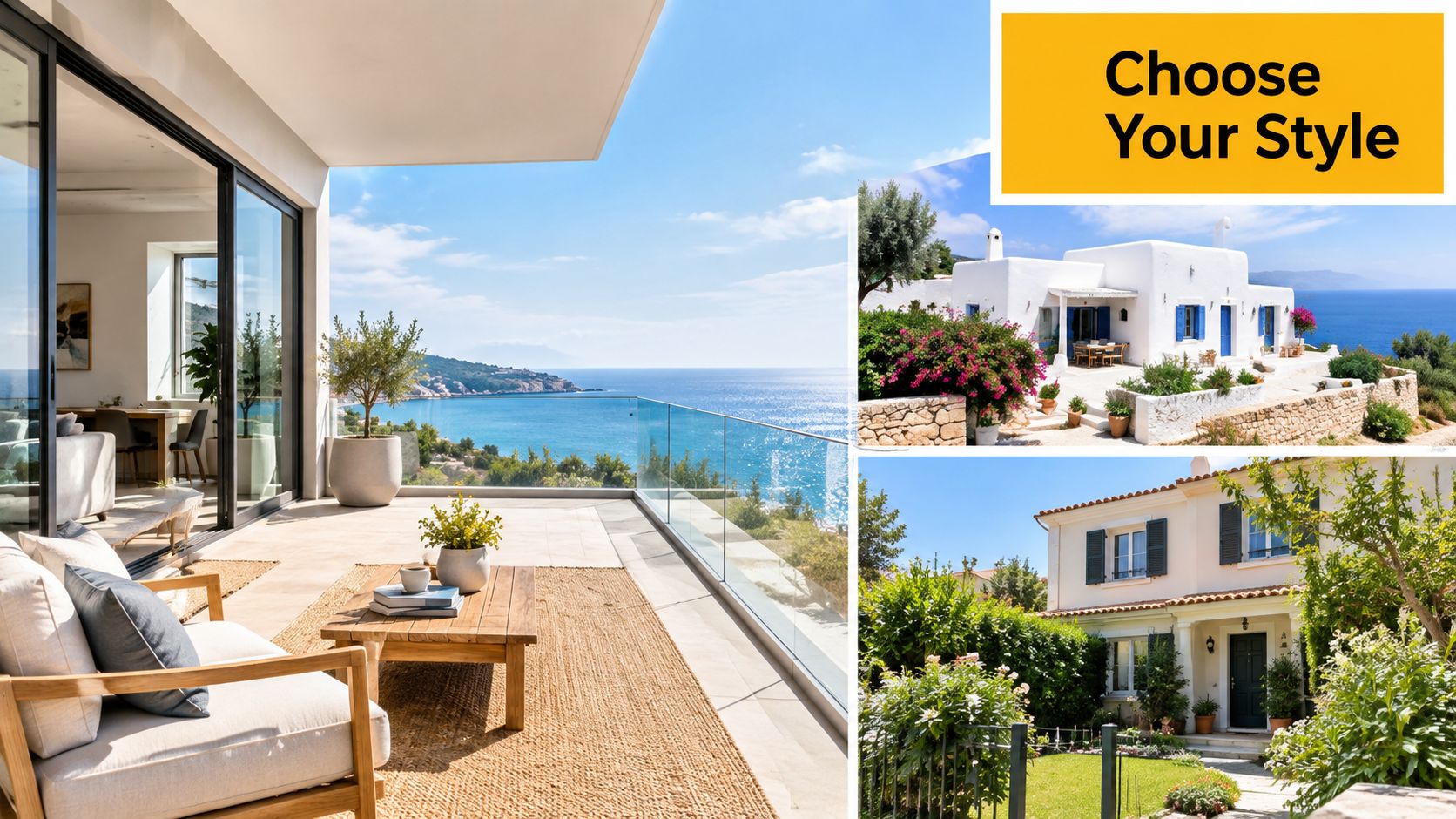
Apartments and penthouses often suit holiday use and buyers who want shared facilities, simpler upkeep and a base near beaches or services. Check community fees, lift condition, terrace orientation, storage and whether short-term letting is restricted by the community. A penthouse view won't compensate for poor access if mobility matters.
Villas offer privacy, gardens, pools and flexible living space, which suits families, longer stays and buyers who entertain. You'll also take on more responsibility for roofs, waterproofing, boundaries, pool equipment and garden water use. Ask who maintains the property when you're away and what that costs in practice, without relying on a seller's informal estimate.
Matching Format to Lifestyle
- Bungalows and townhouses: These can balance outdoor space with a more manageable footprint, but you should check stairs, community rules and parking carefully.
- Fincas: Rural character and land appeal to buyers seeking space, yet access, utilities, planning status and renovation scope need particular care.
- Plots: Land offers design freedom, but buildability, services, slope and licence requirements decide whether the project is realistic.
- New-build properties: Modern layouts and efficiency features can be attractive, but you still need to verify delivery terms, specifications, community costs and legal documentation.
Describe your ideal home in practical terms before you view. Note bedrooms in regular use, outdoor space you will maintain, accessibility, work space, guest needs and storage. When a listing headline sounds perfect, that list helps you spot the compromise hidden behind the category.
Read Calpe's Demand Trends Carefully
Strong summer figures can mislead buyers who treat August as a forecast for the whole year. Calpe's demand evidence is strong in peak season, but you need to read it month by month and separate visitor volume from legal, profitable property use.
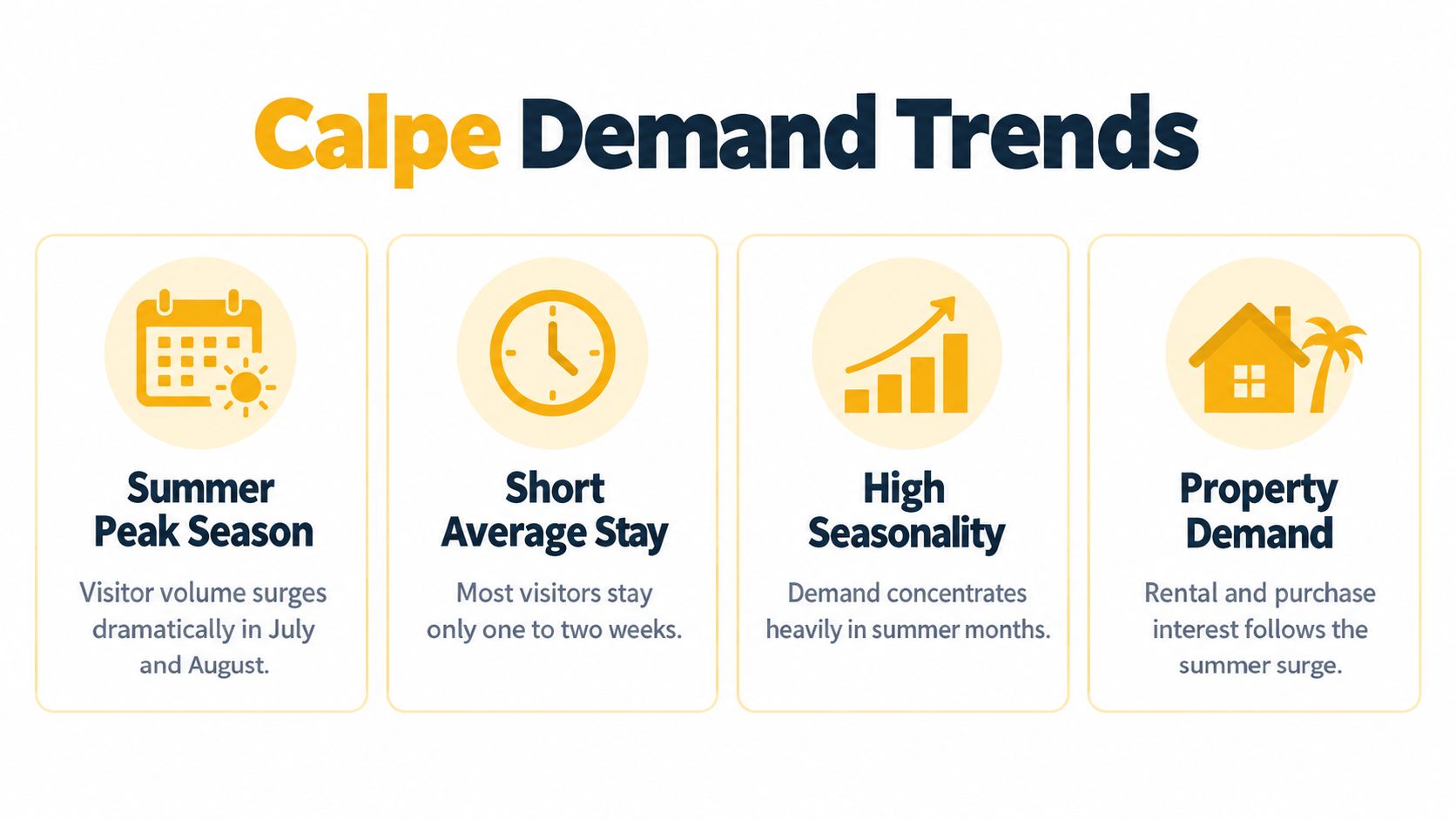
Overall occupancy reached 79.87% in June, 81.26% in July and 93.57% in August 2025, while tourist apartment occupancy rose to 89.84% in August 2025. Those numbers show exceptional seasonal demand, especially for apartments. They don't prove that a specific apartment can be let legally, that its community allows holiday use or that winter income will follow the same pattern.
INE tourism accommodation statistics report that Calp recorded 817,187 overnight stays in 2025, an average stay of 7.4 nights and an annual average occupancy rate of 38.86% for the covered accommodation category. The contrast between peak months and the annual average is the lesson. A disciplined buyer plans around the full calendar, not the strongest weeks.
Test Your Assumptions Before You Rely on Them
First, define whether income is essential or only a bonus. If you need rent to make ownership comfortable, verify permitted use, tourist authorisation where applicable, community restrictions, management costs and realistic off-season demand before you commit.
Second, consider who visits and when. A mix of domestic and international demand can support different strategies, but your property still needs the right layout, location and compliance for the guests you hope to attract. A family-sized home far from the beach and a compact apartment near the promenade don't compete for the same stay.
Peak-season demand is evidence of Calpe's appeal. It isn't evidence that every property will let easily, legally or profitably for twelve months.
Complete Legal Financial and Property Checks
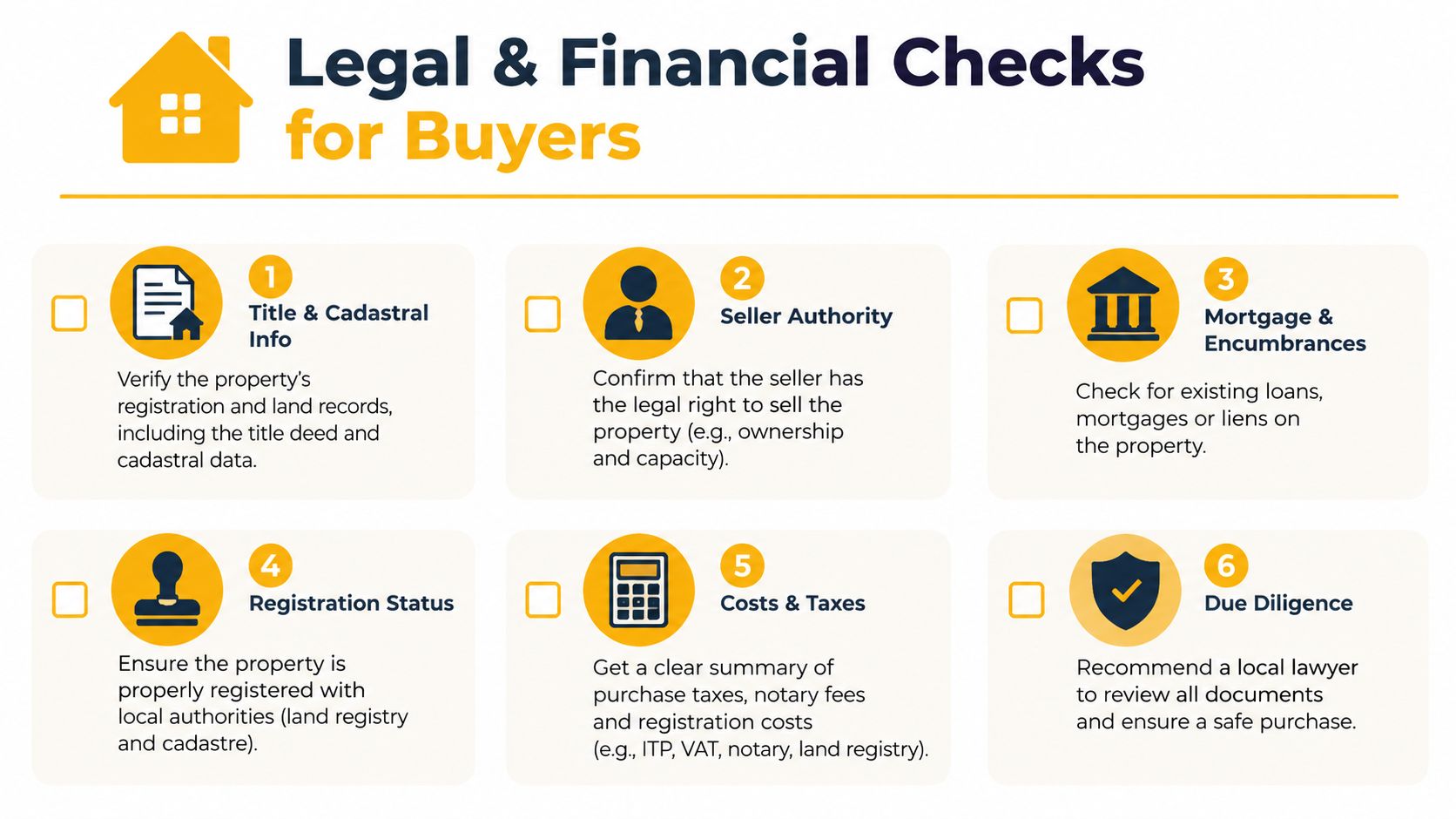
Due diligence protects you before emotion, deposits and deadlines take over. Treat it as a sequence, not a final administrative step, and involve an independent lawyer who works for you rather than for the seller or developer.
Ownership and Registration Checks
- Title and cadastral information: Confirm the registered description matches the property you're buying, including boundaries, built area and annexes.
- Seller authority: Verify the seller has legal right to sell and that all necessary parties will sign.
- Mortgage and encumbrances: Check for existing loans, liens, embargos or other charges that must be cleared correctly.
- Registration status: Ensure the home, extensions and relevant changes are properly recorded, or understand what regularisation would involve.
Planning, Community and Rental Use
Ask about municipal planning status, renovation permissions and whether past works were licensed. Review community fees, planned special assessments, meeting decisions and rules on terraces, pets, parking and holiday letting. A low purchase price is less attractive if major communal works are already foreseeable.
One specific restriction matters for conversion ideas. The Generalitat Valenciana published an agreement suspending, throughout Calp, the processing and granting of licences for converting premises in multi-family buildings into dwellings where those premises were not originally intended for residential use. Buying an existing authorised home is therefore different from hoping to create one through a change of use.
Budget beyond the price for purchase taxes, notary and registry costs, legal advice, finance charges where relevant and immediate maintenance. Your lawyer and tax adviser should confirm current amounts for your circumstances rather than leave you relying on general online estimates.
Physical and Climate Screening
Calp's climate adaptation plan identifies water scarcity as its highest current risk, followed by torrential rainfall and flooding, while describing the present risk level as manageable. That translates into practical checks. Inspect drainage, basement waterproofing, low-lying garages, retaining walls, stormwater discharge and evidence of water ingress after heavy rain.
Also examine façade condition, exposed metalwork, roof waterproofing, pool and irrigation demands, shading and ventilation for heat. Ask an insurer about exclusions before completion. A beautiful coastal position can still be a sound purchase, but only if you price in the maintenance and adaptation work the setting may require.
Apply the Lessons to Common Buyer Scenarios
Real decisions become clearer when you apply the same evidence to different lives. The housing stock itself explains why. INE records show Calp had 24,957 dwellings, including 10,004 conventional primary residences, 14,950 non-primary homes, 11,806 secondary residences and 3,144 vacant properties.
That structure means many properties were bought for seasonal use. You shouldn't assume every available home is equally suited to permanent living, rental use or resale to a year-round buyer.
Three Buyers, Three Shortlists
A seasonal international buyer wants an easy base for repeated holidays. Their shortlist should favour walkable services, manageable community obligations, secure parking and a layout that works for guests without excessive upkeep. Winter community life may matter less, but legal use still matters if they hope to let the property when they're away.
A family relocating for most of the year needs a different test. They should prioritise school access, healthcare, work space, storage, heating and cooling, neighbourhood activity in winter and safe routes for children. A hillside villa may offer space, while a central townhouse may simplify daily routines.
An investor must be the most disciplined of the three. Their focus should be permitted rental use, community restrictions, operating costs, seasonal occupancy, management arrangements and exit appeal to future buyers. Lifestyle features still matter because guests and future purchasers notice them, but unverified income assumptions shouldn't drive the offer.
For buyers who want support applying these filters, AP Properties Spain provides area guidance suited to individual needs, property shortlisting, negotiation support, legal coordination and completion assistance across the Costa Blanca and Costa Cálida. Used well, that kind of help organises the search. It doesn't replace your independent lawyer or your own clarity about how you'll use the home.
Make a Confident Calpe Buying Decision
A confident decision comes from verification, not urgency. Before you arrange viewings for property for sale in Calpe, write down your primary use, the months you'll spend there, your neighbourhood priorities and the property features you can't compromise on. That short document will save you from comparing homes that were never comparable.
Your Final Framework
- Use: Decide whether this is a permanent residence, second home, rental-led purchase or a blend, and be honest about which use comes first.
- Area: Test beachfront, urban and hillside settings against transport, parking, noise, services and winter activity.
- Property type: Match layout, outdoor space, accessibility and maintenance to the life you described, not to a listing category.
- Evidence: Separate peak-season occupancy from annual suitability and from legal rental potential.
- Resilience: Check drainage, water use, heat comfort, waterproofing and insurance before you finalise your budget.
Assemble the right team early. An independent lawyer verifies title, planning and contracts. A tax adviser clarifies purchase and ownership costs. A technical professional can inspect condition where the property's age, extensions or exposure justify it.
If you keep those roles distinct, you'll make a calmer offer and negotiate from knowledge rather than hope. Calpe can work beautifully for permanent living, seasonal enjoyment or carefully planned investment. The key is choosing the property that matches your purpose and proving, on paper and in person, that it does.
If you're ready to turn your Calpe priorities into a focused shortlist, visit AP Properties Spain to discuss areas, property types and the checks that matter for your intended use. Their multilingual team can help you compare suitable homes, co ordinate with legal professionals and move through negotiation and completion with clearer expectations.
Share