



8 Real Estate Investment Quotes for Property Buyers
“Buy property and wait” is incomplete advice. Waiting won't resolve an illegal extension, pay community fees or turn a summer booking calendar into reliable year-round income. A property can be a satisfying home and a disappointing investment at the same time.
The best real estate investment quotes still help buyers make decisions, provided you treat them as questions rather than promises. Scarcity matters, but so does permission to build. Rental income matters, but only after expenses. Location matters, but the right location depends on who will use the property.
For international buyers on the Costa Blanca, those distinctions become practical quickly. You'll need to consider an NIE, municipal planning checks, purchase costs, IBI property tax and the cost of owning a home while you're abroad. Around La Romana, Alicante, a rural setting also raises different questions from a beachfront apartment in Calpe.
These familiar sayings offer useful starting points for buying, renovating and renting. Their value lies in the action they prompt before you sign, not in how confidently they predict your future wealth.
1. "Buy land. They're not making it anymore." (commonly attributed to Mark Twain)
Scarcity isn't the same as buildability. A plot near Jávea may be scarce, but its investment value depends on what you can legally do with it, how you can access it and what connecting services will cost.
The saying's origin is disputed. It's widely attributed to Mark Twain, with Will Rogers also sometimes credited, so treat it as a memorable principle rather than a verified quotation.
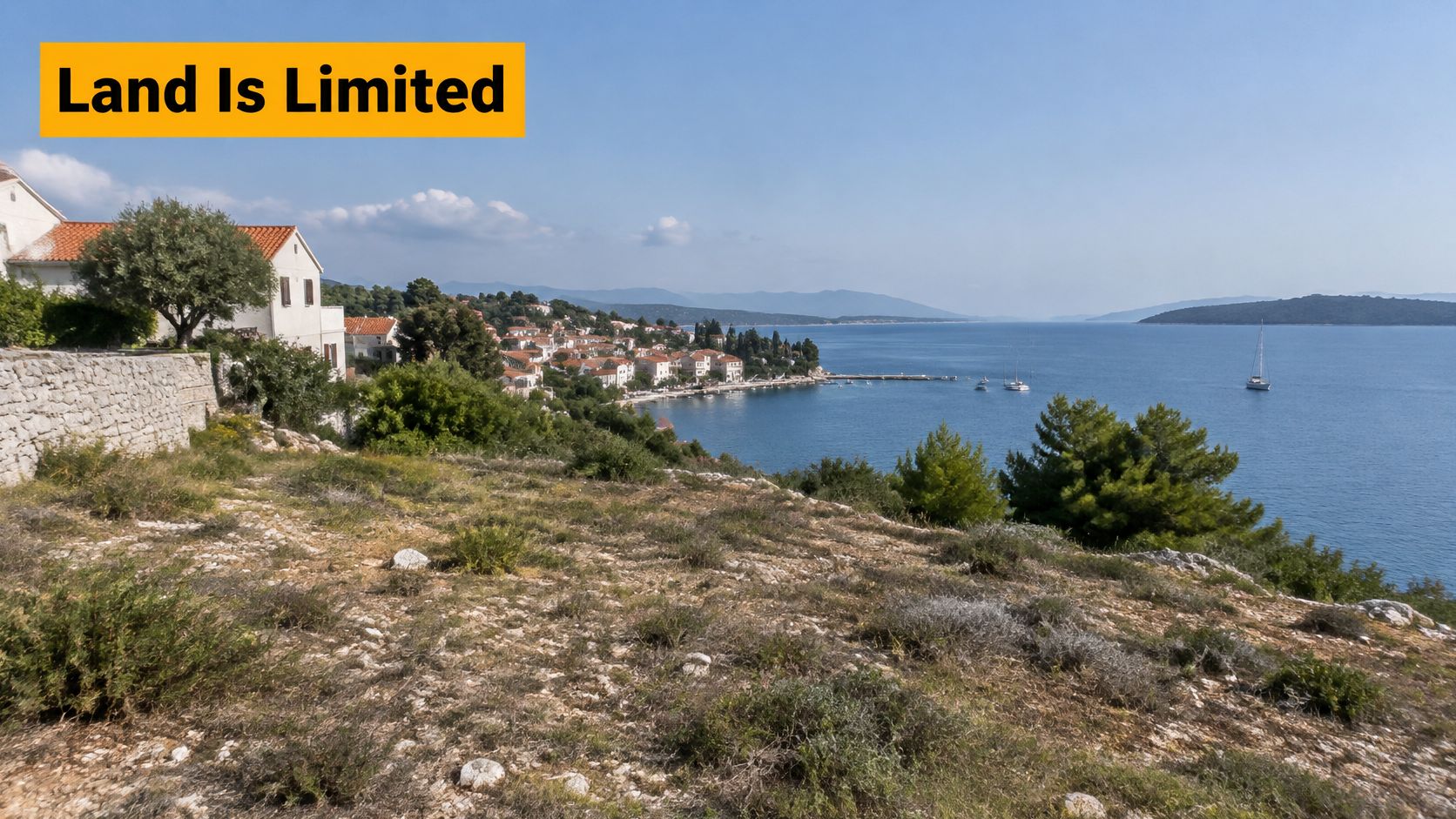
Consider a buyer comparing an urban plot near Calpe with rural land outside La Romana. The cheaper plot isn't automatically better value. A workable building proposal, legal access and confirmed utility arrangements can matter more than the amount of land included.
Check what the land actually allows
- Planning classification: Ask the ayuntamiento to confirm whether the land is urban, developable or rural, and what restrictions apply to the intended use.
- Services and access: Verify legal road access, water, electricity and wastewater arrangements. A nearby connection isn't proof that you can use it.
- Registered rights: Request a Nota Simple from the Land Registry and have your lawyer examine ownership, charges and easements.
Road or utility improvements might increase a rural plot's usefulness, but don't pay today for infrastructure that exists only in a seller's description. Obtain written evidence of approved works and establish who pays.
Decision step: Value the plot according to its confirmed legal use and realistic development costs, not the home you hope someone will eventually permit.
2. "The rich buy assets. The poor only have expenses." Robert Kiyosaki
A Torrevieja apartment can earn summer rent and still require the owner to subsidise it. The distinction behind this saying, associated with Rich Dad Poor Dad author Robert Kiyosaki, is useful: an income-producing asset should be assessed by what remains after costs.
It's less useful as a judgement about people. For a buyer, the important question is whether the property supports the intended financial plan.

Separate rental income from spendable cash
Build the rental assessment from achievable bookings or comparable long-term rents. Deduct IBI, community fees, insurance, management, maintenance, utilities paid by the owner and vacancy, then assess financing and tax separately.
For a holiday apartment in Guardamar, include cleaning, linen replacement and booking costs. For a townhouse near Alicante intended for longer lets, examine tenant demand, repair obligations and the consequences of a gap between tenancies.
Practical rule: Reserve your own holiday dates before estimating rental income. You can't count the same summer weeks as both personal use and paid occupancy.
Confirm the current Valencian Community requirements and municipal restrictions before assuming holiday letting is available. Ask your lawyer to check the property's eligibility and any relevant community rules rather than relying on an existing advertisement.
Decision step: Compare a conservative rental scenario with your annual ownership budget. If personal use explains the shortfall, acknowledge it as lifestyle spending rather than disguising it as investment return.
3. "Real estate cannot be lost or stolen... it is about the safest investment on earth." Donald Trump
A physical asset isn't a guarantee of financial safety. This wording circulates with inconsistent attribution, and similar language is associated with Franklin D. Roosevelt. The useful principle is durability, not a claim that property is risk-free.
A home in Dénia remains a tangible asset during a market downturn. Its owner can still face expensive repairs, legal problems, financing pressure or difficulty selling when cash is needed.
Define safety before you buy
A cash purchase removes mortgage repayments, but it also ties up capital. A buyer who spends almost everything at completion may have less resilience than a financed buyer who retains an adequate reserve.
Consider a purchaser choosing a long-term home in Jávea. Before deciding that paying cash makes the purchase safe, they should budget for the applicable ITP or IVA treatment, other acquisition charges, notary, registry and legal fees, furnishing and immediate repairs.
- Legal protection: Have an independent lawyer review the property and contract before you sign a reservation agreement.
- Physical protection: Arrange a technical inspection and obtain realistic quotations for necessary work.
- Financial protection: Keep money available for maintenance and an extended period without rental income.
Set the maintenance reserve according to the building's condition and features. A pool, exposed terraces and extensive grounds require a different budget from a straightforward apartment.
Decision step: Test whether you could keep the property comfortably if rental income stopped and an urgent repair arrived together. That's a stronger definition of safety than owning bricks and land.
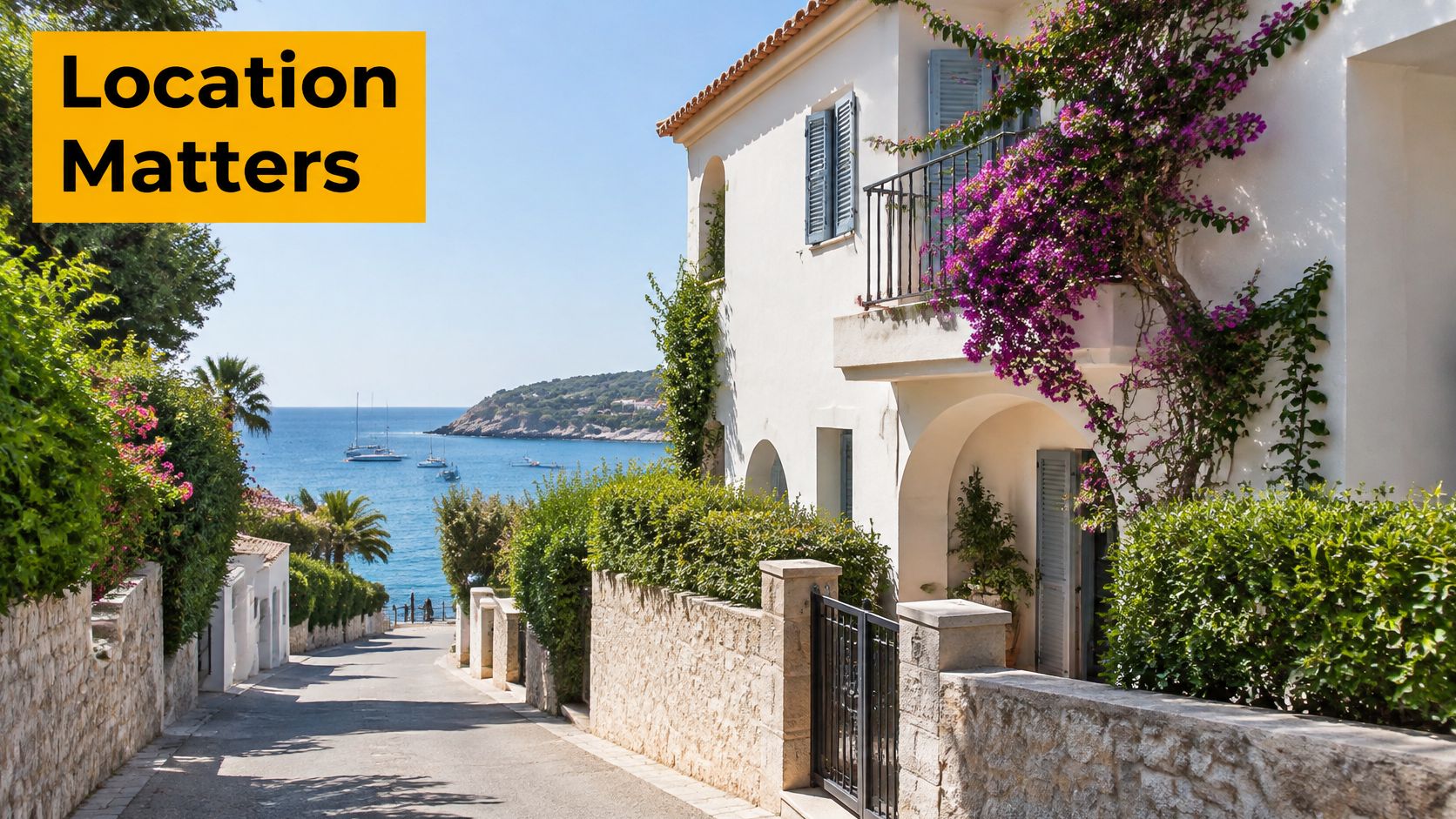
4. "Location, location, location." Harold Samuel
Often attributed to British property developer Harold Samuel, this maxim works only when you define location for a particular user. A holiday guest, a permanent resident and a family renting through the school year won't necessarily choose the same street.
A marina-side apartment in Calpe may suit visitors seeking beaches and restaurants. A home in an established Alicante neighbourhood may better suit tenants who prioritise work, schools, shops and everyday transport.
International demand is substantial, but it isn't proof of rental performance. Spain's housing annex records foreign purchasers accounting for 14.6% of Spanish home sales in 2024, which describes buyer participation rather than a property's occupancy or return (European Commission housing annex).
Inspect the address, not just the destination
Visit outside the holiday season and return at different times of day. Walk the actual route to shops and transport, check parking, listen for traffic and establish whether nearby services stay open.
Ask the ayuntamiento about planned roads, development and public facilities. Compare asking prices per square metre only between comparable homes, accounting for condition, outside space, access and usable accommodation.
A sea view can justify personal enjoyment. It doesn't, by itself, establish year-round tenant demand.
For a buyer considering La Romana, the appeal may be space, village life and an inland setting rather than beach access.
Decision step: Write down your likely occupant's daily routine, then test whether the address makes that routine convenient.
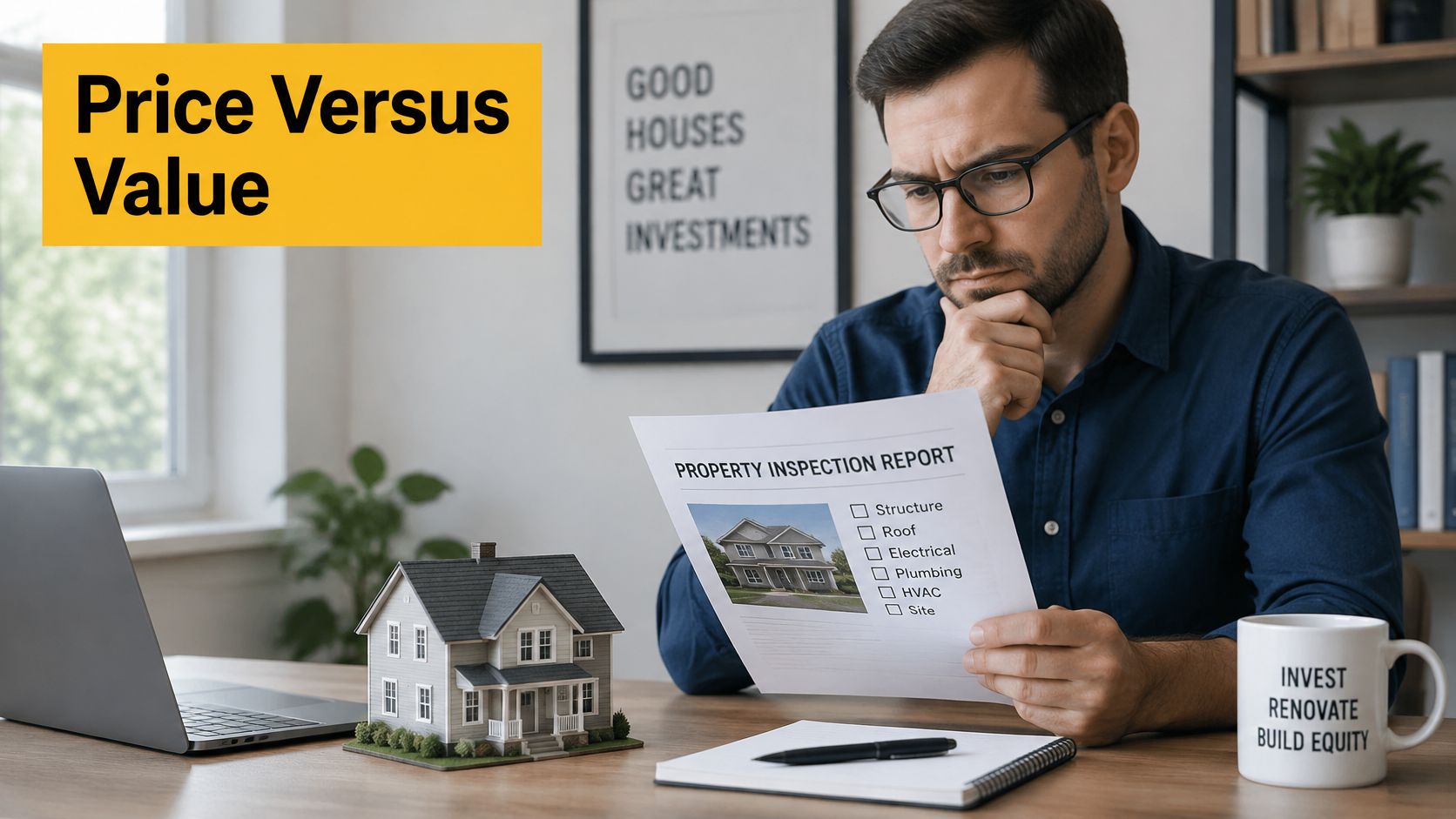
5. "Price is what you pay. Value is what you get." Warren Buffett
Suppose a resale villa looks cheaper than nearby alternatives, but its enclosed terrace doesn't match the documentation. The discount may reflect a problem rather than an opportunity.
Buffett's distinction is especially useful here: the asking price tells you what the seller wants, not what you'll receive. Condition, lawful accommodation, operating costs and resale prospects determine whether the purchase makes sense.
National price movements aren't a substitute for this assessment. Spanish residential property prices rose 8.1% year on year in 2024, according to CBRE's residential market figures, but that doesn't establish the value of a particular villa in Alicante province.
Compare the complete purchase
Commission an independent building survey appropriate to the property. Ask the surveyor to inspect structural condition, damp, roofing, drainage and installations, while your lawyer checks registration and planning documents.
- Legal accommodation: Reconcile the physical layout with the registered description and municipal permissions.
- Renovation scope: Obtain an itemised specification, including permissions, professional fees and contingency.
- Ownership cost: Add acquisition expenses, immediate work and ongoing charges before comparing alternatives.
A refurbishment can add usefulness and appeal, but cosmetic improvements won't necessarily resolve structural defects or planning irregularities. Renegotiating the price doesn't make an unlawful extension lawful.
Decision step: Compare each candidate on its total cost in a legally sound, usable condition. Reject apparent bargains when the route to that condition remains uncertain.
6. "Be fearful when others are greedy, and greedy when others are fearful." Warren Buffett
Being contrary isn't enough. Buying an unpopular property works only when you understand why other buyers are avoiding it and can distinguish temporary hesitation from a lasting defect.
Buffett's counter-cyclical principle encourages independent judgement. On the Costa Blanca, that means resisting pressure during enthusiastic markets without assuming every reduced listing deserves an offer.
Replace market sentiment with property evidence
Spain's real-estate investment volume reached €12.9 billion during the first nine months of 2025, according to CBRE's investment market figures. That national capital-flow measure doesn't tell you whether a coastal resale apartment is sensibly priced.
Consider a buyer comparing a heavily promoted new-build with an older apartment needing work. The resale may offer negotiating room, but only after renovation costs, community finances and legal checks are understood. The new-build may offer convenience, but that doesn't justify ignoring comparable alternatives.
Negotiating discipline: Decide your maximum all-in purchase cost before discussing a discount. A reduction from an inflated asking price isn't evidence of value.
Track comparable listings, withdrawn properties, achievable rents and the alternatives available within your budget. Where completed-sale evidence is accessible, give it more weight than promotional claims.
Keep financial reserves so that you aren't forced to sell during a weak period. Ask why the seller wants a quick transaction, but verify the documents regardless of the explanation.
Decision step: Buy when the property meets your criteria at a defensible price, not merely because other buyers seem excited or nervous.
7. "An investment in knowledge pays the best interest." Benjamin Franklin
Understanding the process protects your choices before it protects your money. This saying is commonly attributed to Benjamin Franklin, although its precise original wording isn't firmly established.
For an international buyer, useful knowledge is specific. It means understanding an NIE, the purchase contract, municipal planning records, ownership costs and the difference between a notary's role and your lawyer's advice.
Learn the obligations before completion
Arrange your NIE, the foreigner identification number used in Spanish administrative and tax processes, early enough that it doesn't become a last-minute obstacle. Have your adviser confirm the documents needed for your circumstances.
A buyer considering rural land near La Romana should study the planning position before commissioning a house design. A buyer choosing an apartment should review community accounts, meeting minutes and proposed works before treating the annual fee as the full ownership commitment.
- Annual obligations: Understand IBI and ask a tax adviser about non-resident obligations for personal use and letting.
- Contract protection: Obtain an explanation of deposits, deadlines, conditions and consequences of withdrawal.
- Completion documents: Review the escritura with your independent lawyer and confirm responsibility for registration afterwards.
Exit costs deserve attention too. When a non-resident sells Spanish property, the purchaser generally withholds 3% of the agreed sale price as an advance against the seller's tax liability, according to the Tax Agency's Modelo 211 instructions.
Decision step: Don't sign until you can explain the main commitments, continuing obligations and exit process in your own words.
8. "Put all your eggs in one basket and then watch that basket." Andrew Carnegie
Carnegie's saying is best treated as an argument for active oversight, not permission to ignore diversification. If most of your available capital goes into a home, you need a realistic plan for managing that concentration.
Consider an overseas owner of a renovated holiday villa. Monitoring bookings alone won't reveal whether the investment is performing well. The owner also needs visibility over payments, repairs, cancellations, utilities and future replacement costs.
Watch the costs as closely as the calendar
Set up a simple ownership dashboard using a spreadsheet and a shared document folder. Keep invoices, insurance documents, community notices and maintenance records together rather than scattered across messages.
- Rental performance: Track money received, occupancy and management charges separately from advertised rental rates.
- Property condition: Log defects, completed repairs and equipment likely to need replacement.
- Cash reserves: Keep a contingency fund covering several months of ownership costs and plausible urgent work.
- Local responsibility: Establish who can inspect a problem, authorise action and provide evidence when you're abroad.
Diversification also needs thought. A coastal apartment and an inland home may serve different users, but both remain exposed to Spanish property rules and ownership costs. Buying in different towns isn't complete protection against shared risks.
A single carefully managed property can fit a buyer's plan. It becomes fragile when the owner depends on uninterrupted bookings, postpones maintenance or assumes an immediate resale will always be possible.
Decision step: Before buying, assign responsibility for management and define the warning signs that would trigger action.
Core Principle, Best For and Main Risk Across the Eight Quotes
A quote earns its place only if it survives the costs and checks behind a Costa Blanca purchase.
Item | Core Principle | Best For | Main Risk |
|---|---|---|---|
“Buy land. They're not making it anymore.” (commonly attributed to Mark Twain) | Finite land supply can support long-term value | Buyers focused on scarce, well-located plots | No income until used; zoning limits and slow resale |
“The rich buy assets. The poor only have expenses.”, Robert Kiyosaki | Favor assets that generate income over costs | Evaluating rental properties and cash flow | High costs, uneven rental income, or overborrowing |
“Real estate cannot be lost or stolen... it is about the safest investment on earth.” (commonly attributed to Donald Trump, with similar wording associated with Franklin D. Roosevelt) | Property is tangible and may preserve value with careful ownership | Long-term owners who can manage and maintain property | Market declines, limited liquidity, and hidden costs |
“Location, location, location.”, Harold Samuel | Location strongly shapes demand and value | Buyers prioritizing rental demand and resale prospects | High prices and changing or seasonal demand |
“Price is what you pay. Value is what you get.”, Warren Buffett | Assess a property's worth beyond its asking price | Buyers conducting due diligence and cost analysis | Value is hard to estimate; repairs may exceed budgets |
“Be fearful when others are greedy, and greedy when others are fearful.”, Warren Buffett | Consider opportunities against market sentiment and cycles | Patient buyers with reserves and flexible financing | Downturns are difficult to time and may deepen |
“An investment in knowledge pays the best interest.”, Benjamin Franklin | Research and preparation improve investment decisions | Buyers handling unfamiliar laws, taxes, and markets | Research can be outdated or delay decisions |
“Put all your eggs in one basket and then watch that basket.”, Andrew Carnegie | Concentrated investments require careful selection and oversight | Owners actively managing a focused property investment | Concentration magnifies local, vacancy, and repair risks |
Use the row that matches your purpose, then test the risk column against NIE timing, IBI and community fees, seasonal holiday-let income and ayuntamiento planning checks before treating the saying as guidance.
Turning Quotes Into a Costa Blanca Buying Plan
Quotes earn their place when they change what you do next. Before your next offer, test the property against the fundamentals: is the price backed by value, does the location support your intended demand, and can you carry the costs through a slow season?
Start with the purpose of the purchase. A permanent home, a holiday retreat and an income-focused investment each ask for different compromises. If you plan to combine personal use and letting, decide which one wins when peak dates conflict.
Put evidence behind the offer
Build a property file containing the Nota Simple, ayuntamiento planning checks, technical findings, community documents and an itemised acquisition budget. Confirm your NIE requirements early and record what has been verified, what remains uncertain and who is responsible for resolving each outstanding issue.
Then prepare an ownership budget that works without optimistic appreciation. Include IBI, community fees, routine running costs, a maintenance reserve and realistic holiday-let income across high and low seasons. Keep financing repayments and tax calculations visible rather than burying them inside a headline yield.
- Resolve before signing: Investigate ownership discrepancies, uncertain permissions and unexplained charges.
- Negotiate with evidence: Use documented repair costs and comparable alternatives rather than an arbitrary discount target.
- Retain flexibility: Preserve enough cash to handle delays, vacancies and necessary work without rushing into a sale.
A good location can still produce a bad purchase. A low price can still leave you with legal costs, weak rental demand or a property that is hard to manage from abroad.
AP Properties Spain, a licensed real-estate agent in the Comunidad Valenciana, supports buyers through the purchase process. We help coordinate the documentation required for presentation before a notary, while lawyers advise on the transaction and your best interests.
The practical priority is matching the decision to your circumstances. The strongest purchase is one you understand, can afford to hold and can manage after the excitement of completion has passed.
AP Properties Spain helps buyers compare new-build and resale homes on the Costa Blanca, with area guidance, negotiation support and coordination through completion. Visit AP Properties Spain to discuss your preferred location, intended use and ownership budget, and turn these investment principles into a focused property search.
Share


